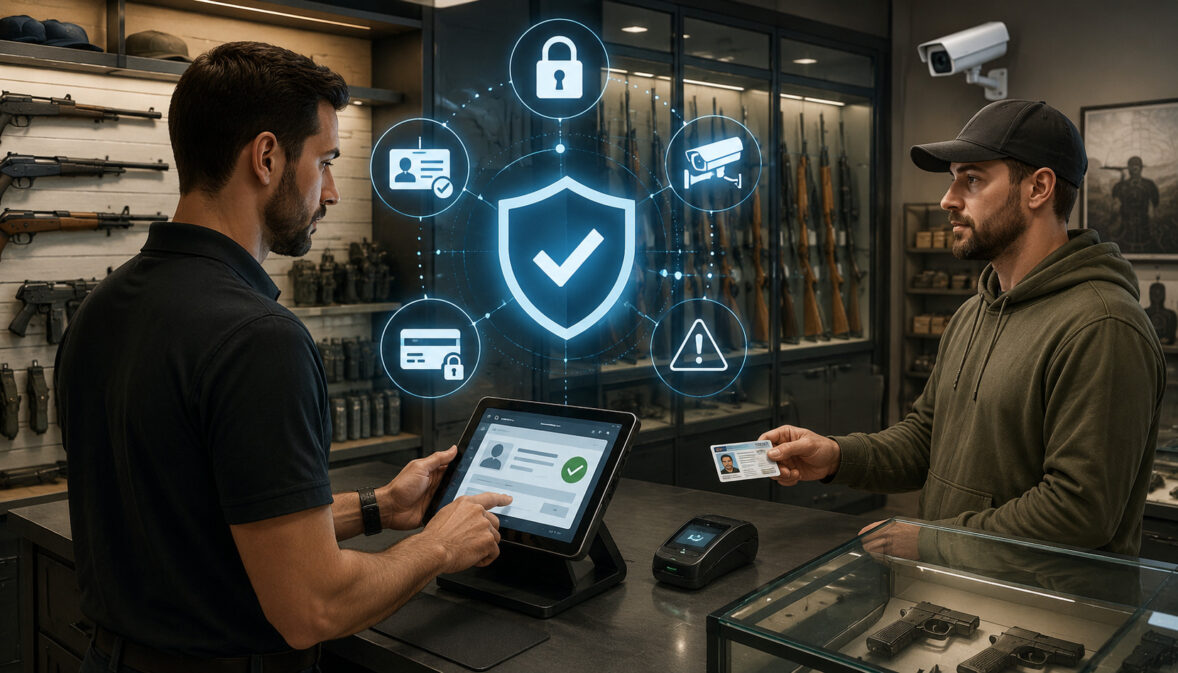
Fraud prevention strategies for gun businesses are essential for any firearm-related operation that accepts payments, manages regulated products, ships orders, handles customer records, or maintains a firearm merchant account.
Gun shops, FFL dealers, shooting ranges, firearm accessory sellers, outdoor sporting goods stores, and online firearm-related businesses often deal with higher-value transactions, sensitive product categories, strict documentation requirements, and closer payment review than many general retail businesses.
Fraud can affect more than one sale. A suspicious transaction may create a chargeback, inventory loss, delayed funding, customer service burden, or processor review. Repeated problems can put cash flow, account stability, and customer trust at risk.
For businesses that rely on card acceptance, secure payment processing for firearm businesses is not just a checkout concern. It is part of everyday risk management.
A strong fraud prevention plan combines secure payment tools, customer verification, staff training, order documentation, chargeback prevention, website clarity, refund controls, and ongoing transaction monitoring.
No single tool can stop every fraud attempt. The goal is to create a layered system that helps staff identify suspicious transactions early, review them consistently, and respond with organized records when questions arise.
This article explains practical fraud prevention for gun businesses in an educational way. It does not replace legal, regulatory, banking, or contract-specific review. Firearm businesses should work with qualified professionals when questions involve licensing, payment agreements, shipping rules, privacy obligations, or dispute procedures.
Why Fraud Prevention Matters for Gun Businesses
Fraud prevention matters because firearm-related businesses often operate in a higher-scrutiny payment environment. Many products are high-value, some items are age-restricted or regulated, and online transactions may require extra review before fulfillment.
Even when a sale is legitimate, weak documentation or unclear policies can make it harder to defend against payment disputes.
Fraud prevention for gun stores is especially important when businesses accept online payments, phone orders, invoice payments, or keyed transactions.
These channels can be useful, but they may also increase card-not-present exposure because the cardholder is not physically present at checkout. Payment gateway controls, customer verification, and manual order review can help reduce that exposure.
How Fraud Can Affect Merchant Account Stability
A firearm merchant account allows a business to accept card payments under agreed processor and bank rules. When suspicious transactions, fraud alerts, chargebacks, or customer disputes rise, the account may receive closer review.
That review can lead to requests for documentation, delayed deposits, reserve requirements, processing limits, or account suspension depending on the agreement and risk profile.
Excessive chargebacks are one of the biggest account stability concerns. A chargeback may happen when a customer claims an unauthorized transaction, non-receipt, duplicate billing, product issue, or refund problem. Even when the business believes the sale was legitimate, a weak response file can make the dispute harder to defend.
Firearm merchant fraud prevention is partly about preventing bad transactions before they settle and partly about documenting legitimate transactions well enough to answer later questions. Receipts, signed acknowledgments, customer messages, shipping records, delivery confirmation, refund records, and policy acknowledgments can all support a response.
Businesses should also track dispute reasons by channel. If online orders produce most chargebacks, review website policies, fraud filters, shipping controls, and order confirmation steps.
If keyed transactions create problems, review manual entry rules, staff permissions, and customer verification procedures. Account stability improves when fraud prevention becomes measurable and repeatable.
Why Firearm Businesses Face Unique Fraud Risks
Firearm businesses face unique fraud risks because product type, transaction value, customer verification, shipping complexity, and processor policies can all overlap. A fraudulent order may involve stolen payment credentials, false contact information, a mismatched shipping address, urgent fulfillment pressure, or an attempt to exploit unclear policies.
Online firearm payment fraud can be especially challenging because fraudsters may use convincing customer details, temporary email addresses, or multiple payment attempts before finding a card that authorizes. They may also request unusual shipping arrangements, avoid direct communication, or pressure staff to bypass review.
Firearm retailers also have documentation duties that general retailers may not face. The FBI provides resources for Federal Firearms Licensees related to NICS and related processes, and the ATF provides licensee reference materials that businesses can review for regulatory context.
These resources are not payment fraud tools, but they show why documentation discipline matters in the broader operating environment.
Fraud protection for firearm businesses should therefore connect payment review with store procedures. The payment team, counter staff, compliance staff, and fulfillment team should understand when to pause an order, what records to keep, and who has authority to approve unusual transactions.
Common Types of Fraud Gun Businesses Should Watch For
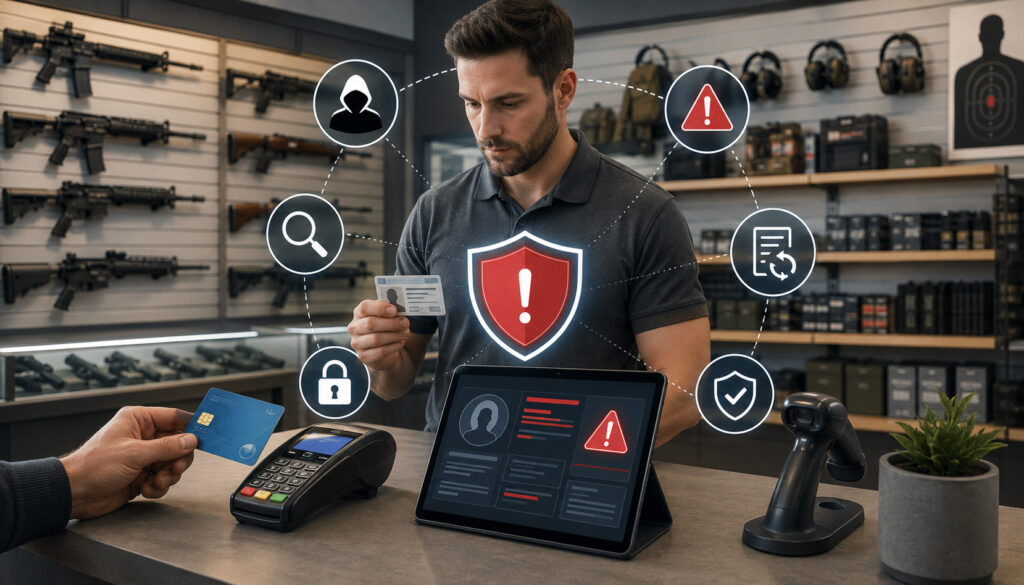
Fraud prevention for firearm retailers starts with understanding how fraud may appear in daily operations. Fraud does not always look dramatic. It may appear as a billing mismatch, repeated declined cards, a rushed high-ticket order, an unusual refund request, a suspicious email, or a chargeback after successful delivery.
Common fraud risks include stolen card use, card-not-present fraud, account takeover, fake customer identities, refund abuse, friendly fraud, phishing, fake vendor invoices, and suspicious high-ticket orders. Some fraud attempts target payment systems. Others target staff behavior, vendor relationships, customer service workflows, or weak refund controls.
Firearm payment processing fraud can also happen when criminals test cards through small transactions before attempting larger purchases. A business may see several declined attempts from one IP address, one email pattern, one customer name, or multiple cards. Velocity checks and gateway alerts can help identify these patterns before fulfillment.
Fraud prevention for gun businesses should also consider non-card fraud. Fake invoices, phishing emails, credential theft, and employee misuse can create losses even when customer payments are legitimate. Strong access control, staff training, and approval workflows reduce these risks.
Card-Not-Present Fraud in Online Orders
Card-not-present fraud occurs when a payment is accepted without the physical card being inserted, tapped, or swiped in front of staff. Online orders, phone payments, invoice payments, and manually keyed transactions can all fall into this category. These transactions can be legitimate, but they usually require stronger fraud screening.
Warning signs may include a billing address that does not match the card, a shipping address that appears unrelated to the customer, a temporary or unusual email address, a customer who avoids phone confirmation, or a rushed fulfillment request. A new customer placing a high-ticket order with expedited shipping may deserve additional review.
Firearm eCommerce fraud prevention should include AVS checks, CVV checks, risk scoring, velocity filters, secure checkout, clear policies, and manual order review for flagged transactions. Staff should compare customer details across the order, payment result, email, phone number, shipping address, and account history.
Businesses should avoid shipping until review is complete when an order shows multiple red flags. A short delay for verification is usually less costly than inventory loss, a chargeback, and a processor review.
Friendly Fraud and Chargeback Abuse
Friendly fraud happens when a customer disputes a legitimate charge. It may be intentional or caused by confusion. A customer may not recognize the billing descriptor, forget a purchase, claim non-receipt despite delivery, misunderstand a refund timeline, or contact the card issuer instead of the business.
Chargeback abuse is more deliberate. A customer may receive an item or service and then dispute the charge to avoid paying. In some cases, a customer may claim an unauthorized transaction even though order records, messages, or delivery confirmation support the business.
Chargeback prevention for gun stores begins before the dispute happens. Clear billing descriptors, detailed receipts, order confirmation emails, visible refund policies, shipping updates, delivery records, and responsive customer support all reduce confusion.
When disputes happen, documentation matters. A strong response may include the receipt, authorization details, order summary, customer communication, tracking number, delivery confirmation, refund policy, and any signed or acknowledged terms. The more organized the record, the easier it is to respond within dispute deadlines.
Payment Fraud Warning Signs for Gun Stores
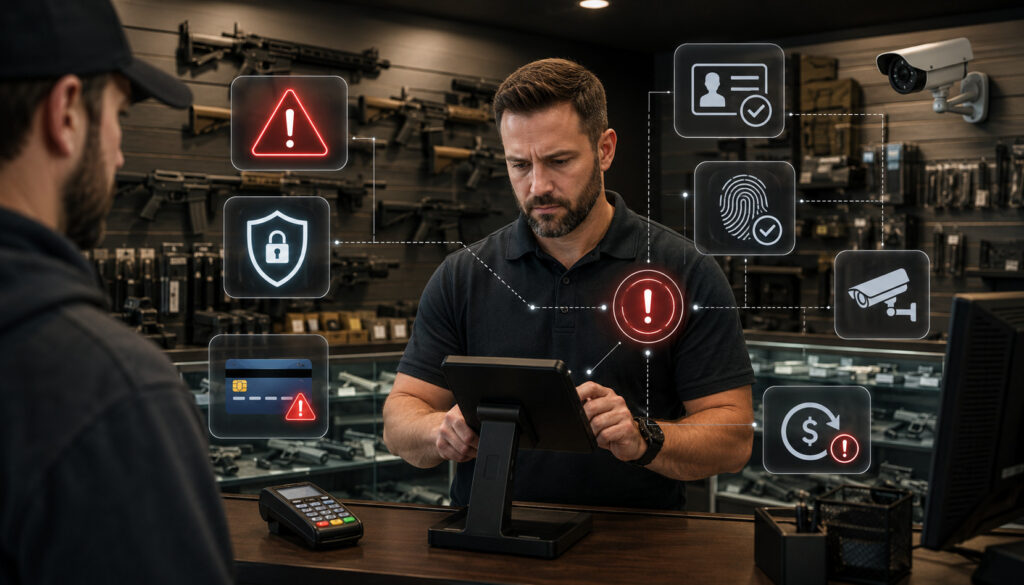
Payment fraud warning signs help staff decide when an order needs closer review. One red flag does not always mean fraud. A legitimate customer may have a billing mismatch after moving, may place a large order, or may need quick fulfillment. The key is to look at the full pattern.
Suspicious transactions often combine multiple concerns. For example, a new customer may place a large online order, use a billing address that does not match, request urgent shipping, and provide a phone number that does not connect. That combination should trigger manual review before fulfillment.
Payment risk management for gun businesses works best when warning signs are written into staff procedures. Employees should know what to do when they see repeated declined cards, mismatched customer details, unusual shipping requests, refund pressure, or fraud tool alerts.
The table below can help teams identify common payment fraud warning signs and decide what to review.
| Warning Sign | Possible Risk | What to Review |
| Multiple declined cards | Stolen card testing | Pause and verify customer details |
| Billing and shipping mismatch | Card-not-present fraud | Review order and contact customer |
| High-ticket rush order | Inventory and payment risk | Verify identity and payment details |
| Repeated small transactions | Card testing | Use velocity controls and monitoring |
| Unusual shipping request | Fraud or diversion risk | Confirm address and order legitimacy |
| New customer with large order | Elevated fraud exposure | Perform additional review |
| Refund request soon after purchase | Refund abuse or buyer remorse | Review policy and order history |
| Chargeback after delivery | Friendly fraud | Gather receipts and fulfillment records |
When to Pause an Order for Manual Review
Manual order review is one of the most practical fraud prevention strategies for gun businesses. Staff should pause an order when payment results, customer details, order size, shipping behavior, or communication patterns do not feel consistent.
Examples include mismatched billing and shipping details, repeated failed payment attempts, multiple cards used by one customer, a high-ticket order from a new account, suspicious email behavior, or a fraud alert from the payment gateway. Staff should also pause orders when the customer pressures the business to ship before normal review is complete.
A manual review should not be random or emotional. It should follow a written workflow. The reviewer can compare AVS and CVV results, check order history, verify contact information, review the shipping address, examine fraud scores, and document the final decision.
Manual review is especially important for online and keyed transactions because the business may have less confidence than it would during a card-present sale. Pausing fulfillment until the review is complete can prevent inventory loss and reduce later disputes.
Why Documentation Matters During Fraud Review
Documentation helps businesses explain what happened, why an order was approved or rejected, and how a dispute should be handled. Without records, staff may rely on memory, which becomes unreliable when disputes arrive weeks after a transaction.
Useful records include receipts, order confirmations, payment authorization details, customer messages, refund records, staff notes, tracking numbers, delivery confirmation, and policy acknowledgments.
For firearm-related transactions, businesses should also maintain required operational records separately according to applicable requirements and professional guidance.
Documentation also helps identify patterns. If several disputes involve the same product type, shipping method, employee, customer behavior, or sales channel, the business can adjust controls. Fraud prevention improves when records are reviewed rather than stored and forgotten.
Strong documentation does not guarantee a dispute win, but it gives the business a better foundation. It also supports processor inquiries, internal audits, staff coaching, and policy updates.
Customer Verification Strategies for Firearm Businesses
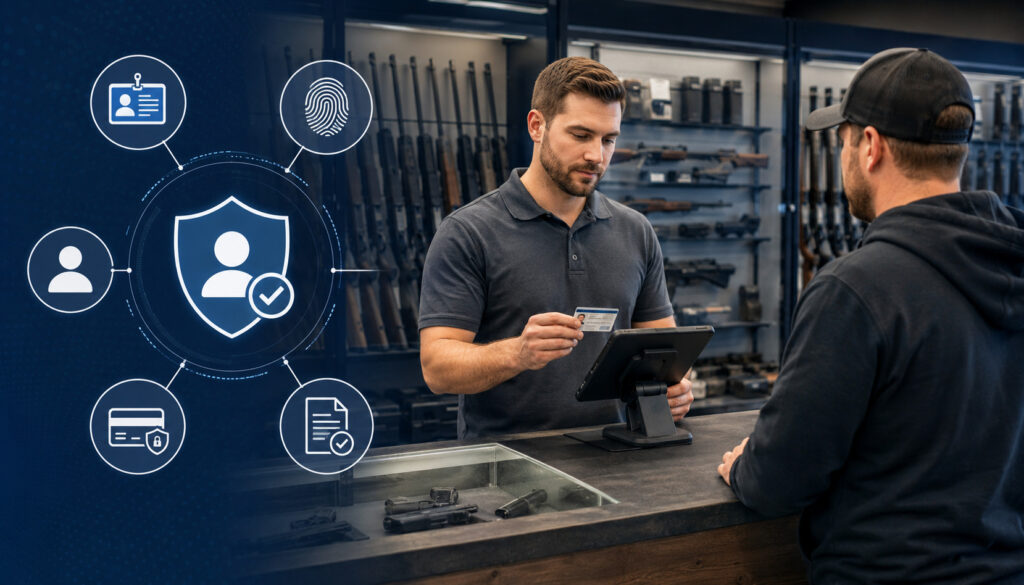
Customer verification is a key part of firearm business fraud prevention. Verification does not mean creating unnecessary obstacles for every customer. It means checking whether the customer, payment method, order details, and fulfillment request appear consistent before the business releases goods or services.
For in-store purchases, verification may involve store procedures, payment method checks, receipt practices, and any required customer process under applicable rules. For online orders, verification may involve billing address review, shipping address review, email and phone consistency, order history, payment results, and fraud scoring.
Businesses should use a risk-based approach. A returning customer with consistent details and a low-risk transaction may not need the same review as a new customer placing a large online order with mismatched information. Risk-based review protects the business while keeping checkout reasonable.
Customer verification also helps with chargeback prevention. When the business can show that customer details were checked, order confirmations were sent, and fulfillment was documented, it is better prepared to respond to disputes.
Verifying Customer Information for Online Orders
For online orders, staff should review whether the billing address, shipping address, email address, phone number, payment details, and customer communication align. A mismatch does not automatically mean fraud, but it should prompt closer review when combined with other warning signs.
AVS results can help compare the billing address with the card issuer’s records. CVV results can help confirm that the customer had access to the card security code. Risk scoring can add another layer by looking at signals such as transaction behavior, IP information, device data, or order patterns.
Staff can also confirm details through customer communication. A short order confirmation call or email may be appropriate for unusual transactions. However, the business should avoid collecting sensitive payment details through unsafe channels.
Verification should be documented. If staff contact the customer, update the order notes with the date, method, summary, and decision. Consistent notes help later if the transaction becomes a dispute.
Avoiding Overly Frictional Verification
Fraud controls should reduce risk without making legitimate customers feel punished. If every order is delayed, every customer is questioned aggressively, or every minor mismatch becomes a cancellation, the business may lose trust and revenue.
A better approach is tiered verification. Low-risk transactions move quickly. Medium-risk transactions receive limited review. High-risk transactions require manager approval or additional confirmation before fulfillment. This creates balance between security and customer experience.
Clear communication helps. Customers are more likely to cooperate when the business explains that verification protects both parties and supports secure payment processing. Policies should be visible before purchase, especially for shipping, refunds, cancellations, and order review.
Businesses should also measure false positives. If many legitimate orders are being delayed by one filter, the settings may need adjustment. Fraud prevention for gun businesses should be strong, but it should also be practical.
Payment Gateway and Fraud Screening Tools
Payment gateway controls are central to firearm payment fraud prevention, especially for online, invoice, phone, and keyed transactions. A payment gateway can help screen transactions before they become losses by using AVS, CVV, risk scoring, velocity checks, transaction filters, IP review, device signals, order review queues, and fraud alerts.
Fraud screening tools are useful, but they are not perfect. A legitimate transaction may be flagged, and a fraudulent transaction may pass. That is why gateway controls should be paired with staff review, customer verification, shipping documentation, and chargeback tracking.
Gateway rules should match the business model. A shooting range membership program, an in-store retail counter, and an online accessory store may have different average ticket sizes, customer patterns, and risk signals. Settings that are too loose may miss fraud. Settings that are too strict may block legitimate customers.
Address Verification, CVV, and Risk Scoring
Address Verification Service, often called AVS, compares billing address information entered during checkout with information on file with the card issuer. CVV checks verify the card security code entered by the customer. These tools are especially helpful for card-not-present transactions.
A strong AVS and CVV match does not prove that an order is safe. A fraudster may have stolen enough data to pass these checks. However, failed or partial results can help staff decide whether more review is needed.
Risk scoring adds another layer. A gateway or fraud tool may assign a score based on transaction amount, location signals, device behavior, velocity, customer history, or other risk factors. Staff can use that score to route orders into approve, review, or decline workflows.
Businesses should document how they use these tools. For example, a policy might say that high-ticket orders with failed AVS results require manager approval before fulfillment. Written rules reduce inconsistency and help staff act confidently.
Velocity Controls and Transaction Limits
Velocity controls help detect repeated attempts within a short period. They can identify patterns such as multiple cards used from one customer account, several failed attempts from the same IP address, repeated small transactions, or rapid purchases that do not match normal customer behavior.
Card testing is a common example. Fraudsters may attempt small transactions to see whether stolen cards work. If the card authorizes, they may attempt larger purchases. Velocity controls can help stop this pattern early.
Transaction limits can also reduce exposure. Businesses may set review thresholds for high-ticket orders, daily transaction counts, unusual repeat purchases, or large refunds. These thresholds should reflect the business’s normal activity, not arbitrary numbers.
Velocity settings should be reviewed regularly. Seasonal promotions, special events, training classes, or membership renewals may create legitimate transaction spikes. Staff should understand when a spike is expected and when it is suspicious.
Fraud Prevention for In-Store Gun Store Payments
In-store fraud prevention focuses on secure card-present payments, trained staff, clear refund controls, and accurate records. Card-present transactions usually carry different risk signals than online transactions because the customer and card are physically present. Still, fraud can happen through counterfeit cards, stolen cards, refund abuse, manual entry, or staff mistakes.
Gun store fraud prevention at the counter should encourage secure payment methods such as chip card insertion and contactless payments. Staff should avoid manually keying card numbers unless policy allows it and a manager approves when appropriate. Manual entry increases risk because it removes some card-present protections.
Receipts and transaction records should be easy to retrieve. Staff should provide receipts, keep payment records organized, and ensure that refunds are tied to original transactions whenever possible. Manager approval should be required for unusual refunds, voids, or adjustments.
In-store teams should also understand suspicious behavior. A customer using multiple cards, rushing staff, avoiding normal procedures, requesting unusual refunds, or refusing reasonable verification may require escalation.
Using Secure Card-Present Payment Methods
Secure card-present payment methods help reduce certain types of payment risk. EMV chip transactions and contactless payments use secure technology that is generally safer than magnetic stripe or manual entry. Secure terminals also help create transaction records that support later review.
Businesses should keep terminals updated, restrict access to device settings, and inspect devices for tampering. Payment devices should be locked down physically where possible and reviewed as part of opening or closing procedures.
Manual card entry should be limited. If a card cannot be read, staff should follow policy rather than improvising. Some businesses require manager approval, customer verification, or an alternative approved payment method before proceeding.
Secure card-present practices do not replace customer service. Staff can explain payment procedures professionally and consistently. When procedures are standard, customers are less likely to feel singled out.
Staff Training at the Counter
Counter staff are often the first line of defense. They see customer behavior, payment issues, refund requests, and unusual order patterns before anyone else. Training helps them recognize red flags without overreacting.
Employees should understand how to handle declined cards, mismatched information, manual entry requests, refund requests, and customer pressure. They should also know when to call a manager and how to document concerns.
Training should include payment security basics. Staff should not write down card numbers, send payment details through unsafe channels, share logins, bypass terminal prompts, or ignore fraud alerts. They should understand why these rules protect the business and customers.
Refresher training matters because fraud patterns change. A short monthly review of recent disputes, suspicious transactions, and policy updates can make staff more consistent.
Fraud Prevention for Online Firearm-Related Sales
Online firearm-related sales require layered controls because fraudsters can hide behind stolen card data, false account details, temporary contact information, and shipping manipulation. Firearm eCommerce fraud prevention should begin before checkout and continue through fulfillment, delivery, and dispute response.
A secure website should include clear contact information, product descriptions, refund policy, shipping policy, privacy policy, terms and conditions, and secure checkout. These elements help legitimate customers understand expectations and reduce disputes caused by confusion.
Online businesses should confirm that sales channels, products, and fulfillment workflows align with payment rules and applicable requirements.
Fraud tools should be configured carefully. AVS, CVV, velocity checks, risk scoring, order review queues, and fraud alerts can reduce exposure. However, staff review remains important for high-risk transactions.
Secure Checkout and Website Trust Signals
Secure checkout helps protect customer payment data and reduces the chance of fraud-related issues. A hosted checkout page, secure payment link, tokenized payment method, or properly integrated gateway can limit exposure to sensitive card details.
Website trust signals also matter. Customers should be able to find the business’s contact details, refund policy, shipping policy, privacy policy, and terms before placing an order. Product descriptions should be accurate and avoid confusion about eligibility, availability, fulfillment, and restrictions.
Clear policies can reduce chargebacks. If a customer understands refund timelines, cancellation rules, shipping procedures, and order review steps before purchase, they are less likely to dispute out of confusion.
Businesses should also maintain website compliance. Broken checkout pages, outdated policies, unclear product pages, or inconsistent fulfillment language can create customer complaints and processor concerns.
Reviewing Suspicious Online Orders Before Fulfillment
Suspicious online orders should be reviewed before fulfillment. Once inventory ships or services are delivered, recovery becomes more difficult. A short review can prevent a larger loss.
Staff should review payment results, AVS and CVV responses, fraud score, billing address, shipping address, customer account history, email address, phone number, IP signals if available, and customer communication. They should also look for rushed shipping requests or pressure to bypass normal procedures.
If the order remains suspicious, the business can request additional confirmation, offer an alternative approved payment method, cancel the order under policy, or escalate to management. The decision should be documented.
A review process should be consistent. Customers with similar risk indicators should be treated similarly. Consistency protects the business from both fraud and customer service problems.
Chargeback Prevention for Firearm Businesses
Chargeback prevention is a major part of fraud prevention for gun businesses. A chargeback can affect cash flow, increase fees, consume staff time, and raise processor scrutiny. Even a business with legitimate sales can face problems if disputes become frequent or poorly documented.
Common chargeback prevention tools include clear billing descriptors, detailed receipts, order confirmations, delivery documentation, refund policies, customer support records, and quick dispute response. Businesses should make it easy for customers to contact them before going to the card issuer.
Chargeback tracking is also important. Businesses should review chargebacks by reason, channel, product type, staff member, and customer pattern. If many disputes involve delayed shipping, the solution may be better communication. If many involve unauthorized claims, the solution may be stronger verification.
Businesses can review general consumer dispute concepts through public resources such as the Consumer Financial Protection Bureau, while remembering that card network rules and merchant agreements control many operational details.
Common Chargeback Causes for Gun Businesses
Common chargeback causes include unauthorized transaction claims, delayed shipping, product not received claims, duplicate billing, refund delays, unclear cancellation terms, product misunderstanding, or customer confusion about the billing descriptor.
Online firearm payment fraud may lead to unauthorized transaction chargebacks when stolen cards are used. Friendly fraud may lead to disputes after delivery. Operational issues such as slow refund handling or unclear order status can also trigger disputes.
Some chargebacks can be prevented with communication. Order confirmation emails, shipment updates, refund status updates, and accessible support can reduce frustration. Customers often dispute when they feel ignored or confused.
Businesses should also review billing descriptors. If the name on the card statement is unclear, customers may not recognize the transaction. A clear descriptor can reduce mistaken disputes.
Evidence That Helps With Chargeback Responses
Chargeback response evidence should be organized before a dispute arrives. Waiting until a dispute deadline is near can lead to rushed, incomplete responses.
Helpful evidence includes transaction receipts, authorization details, AVS and CVV results, order summary, customer communication, account history, shipping records, delivery confirmation, refund records, signed acknowledgments, and policy acceptance. For in-store transactions, receipts and card-present details may be important.
For online transactions, delivery confirmation and customer communication can be especially useful. If the customer claims non-receipt, tracking records may help. If the customer claims confusion, policy acknowledgments and order confirmations may help.
The business should keep dispute files in a consistent format. A standard chargeback folder or case template makes it easier to respond quickly and learn from patterns.
Internal Fraud and Employee Access Controls
Fraud prevention for gun businesses also includes internal controls. Not every loss comes from an outside criminal. Employee errors, excessive access, weak approvals, shared logins, unauthorized refunds, and poor inventory controls can create serious problems.
Role-based permissions help reduce risk. Employees should have access only to the tools they need for their job. A cashier may need to take payments but not export reports, change gateway settings, issue large refunds, or access admin functions.
Internal controls should also cover inventory access, cash drawer procedures, payment tool permissions, customer data access, refund approvals, voids, manual adjustments, and audit logs. These controls protect both the business and honest employees.
The goal is not to create a suspicious workplace. The goal is to create accountability. Clear permissions and documented approvals reduce mistakes, confusion, and opportunities for misuse.
Role-Based Access for Payment Systems
Role-based access means assigning permissions based on job responsibilities. Not every employee should have access to refunds, manual card entry, reporting exports, customer payment details, gateway settings, or admin functions.
For example, a counter employee may process sales and print receipts. A manager may approve refunds and voids. An owner or senior administrator may manage gateway settings, user permissions, and reporting exports.
Unique logins are important. Shared accounts make it difficult to know who performed an action. If a refund, void, or adjustment looks suspicious, audit logs should show which user made the change.
Access should be reviewed whenever staff roles change. Departing employees should be removed immediately. Employees who move to new roles should have permissions adjusted rather than keeping old access.
Monitoring Refunds, Voids, and Adjustments
Refunds, voids, discounts, and manual adjustments should be reviewed regularly. These actions are normal in retail, but unusual patterns can signal fraud, errors, or weak training.
Businesses should monitor refund frequency, refund amounts, refunds without receipts, refunds to different payment methods, repeated voids by one staff member, excessive discounts, and adjustments outside policy. Manager approval should be required for high-risk situations.
Refund records should connect to the original transaction whenever possible. This reduces confusion and supports dispute response. Cash refunds for card purchases should be handled carefully under written policy.
Regular review also helps identify training needs. If one employee makes repeated mistakes, coaching may solve the issue. If several employees misunderstand refund rules, the written policy may need improvement.
Data Security and PCI Compliance
Payment security supports fraud prevention because compromised payment data can lead to stolen card use, account takeover, chargebacks, and reputational harm. PCI compliance, encryption, tokenization, secure payment terminals, password controls, software updates, and network security all help reduce exposure.
The PCI Security Standards Council develops payment data security standards and resources for businesses that handle cardholder data. Businesses should review PCI obligations with their processor, gateway, technology providers, and qualified professionals where needed.
Tokenization can reduce risk by replacing sensitive card data with a token that is less useful if exposed. The PCI Security Standards Council has published guidance on tokenization and how it may affect payment data security scope. Encryption also helps protect payment data in transit and storage when properly implemented.
Firearm businesses should avoid storing full card details insecurely, collecting card numbers through unsafe messages, or allowing staff to save payment data in spreadsheets, notebooks, email, or unapproved systems.
Protecting Customer Payment Data
Protecting payment data begins with limiting who can see it and where it is stored. Businesses should use approved payment systems rather than collecting card details through email, text messages, chat, or paper notes.
Hosted checkout, secure payment links, tokenized cards on file, and approved gateway tools can reduce direct exposure to sensitive card data. These methods also create cleaner records for authorization, refunds, and dispute response.
Staff should never store full card numbers insecurely. They should not take photos of cards, write card details on sticky notes, or send card data through unapproved channels. These practices can create security and compliance risk.
Businesses should also review third-party tools. Website plugins, booking systems, membership software, and POS integrations should be secure, updated, and compatible with payment requirements.
Secure Staff Practices and Device Protection
Staff practices can either strengthen or weaken payment security. Strong passwords, unique logins, multi-factor authentication where available, restricted permissions, and phishing awareness all reduce risk.
Devices used for payments should be protected. Terminals, tablets, computers, and mobile devices should be updated, locked when unattended, and restricted to business use where possible. Payment devices should be inspected for tampering and stored securely.
Wi-Fi and network security also matter. Payment systems should not rely on insecure public networks. Businesses should separate guest Wi-Fi from business systems and work with technology professionals when needed.
Phishing training is important because attackers often target employees. A fake processor email, fake invoice, or fake password reset request can lead to credential theft or payment diversion.
Fraud Prevention Policies and Staff Training
Written policies help staff respond consistently to suspicious transactions, refund requests, customer verification issues, manual entry requests, and chargebacks. Without policies, employees may improvise, and inconsistent decisions can create risk.
A fraud prevention policy should explain order review steps, payment authorization rules, refund procedures, suspicious transaction escalation, documentation requirements, customer verification, chargeback handling, and manager approval thresholds. It should be short enough for staff to use but detailed enough to guide decisions.
Training should connect policy to real examples. Staff should see what a suspicious online order looks like, how to read gateway results, when to pause fulfillment, how to document a review, and when to escalate.
Fraud prevention for firearm retailers works best when staff understand the reason behind controls. Employees are more likely to follow procedures when they see how fraud affects inventory, funding, customer trust, and account stability.
Creating a Fraud Review Workflow
A fraud review workflow gives staff a step-by-step process for flagged orders. It should explain how to identify a flag, what information to check, who reviews the order, what actions are allowed, and how the decision is documented.
A simple workflow may include these steps:
- Identify the warning sign or fraud alert.
- Pause fulfillment until review is complete.
- Review payment results, customer details, and order history.
- Contact the customer when appropriate.
- Escalate to a manager for high-risk orders.
- Approve, cancel, refund, or request another approved payment method.
- Document the decision and supporting information.
The workflow should also explain what not to do. Staff should not ship before review is complete, ignore gateway alerts, accept unsafe payment details, or override controls without approval.
A consistent workflow protects the business from rushed decisions. It also helps new employees learn quickly.
Training Staff to Recognize Red Flags
Staff should be trained to recognize suspicious payment behavior, unusual customer requests, mismatched details, repeated declined cards, refund abuse signs, phishing attempts, and fake invoice tactics.
Training can include examples from the business’s own experience, with private customer details removed. Realistic examples help staff understand patterns better than abstract rules.
Employees should also know how to communicate with customers. Verification should be professional and consistent. Staff should avoid accusations and instead explain that the business is confirming order details for payment security.
Training should be repeated. Fraud prevention is not a one-time onboarding topic. Short refreshers after disputes, system changes, or policy updates help staff stay alert.
Fraud Prevention Checklist for Gun Businesses
A practical checklist helps firearm businesses review whether their fraud controls are complete. The checklist should cover payment tools, customer verification, website policies, documentation, shipping records, chargeback tracking, staff permissions, refund controls, PCI practices, and training.
Businesses with online sales may need deeper review of gateway filters, secure checkout, website policies, and manual order review. Businesses with mostly in-store sales may focus more on terminal security, receipt records, staff training, refund approvals, and cash drawer controls.
The checklist below can be used as a starting point. It should be adapted to the business model, payment agreement, product mix, and professional guidance.
| Fraud Control Area | What to Review | Why It Matters |
| Payment gateway filters | AVS, CVV, risk scoring, velocity checks | Detects suspicious activity |
| Customer verification | Contact, billing, shipping, order details | Reduces false or stolen identity risk |
| Website policies | Refund, shipping, privacy, terms | Reduces disputes |
| Order documentation | Receipts, confirmations, messages | Supports dispute review |
| Shipping records | Tracking and delivery confirmation | Helps prove fulfillment |
| Chargeback tracking | Dispute reasons and ratios | Protects account stability |
| Staff permissions | Role-based access and approvals | Reduces internal risk |
| Refund controls | Manager review and records | Prevents refund abuse |
| PCI practices | Tokenization and secure payment handling | Protects payment data |
| Training | Red flags and escalation process | Improves consistency |
How Often to Review the Checklist
Fraud controls should be reviewed regularly, not only after a loss. Businesses should review the checklist before promotions, product launches, website updates, seasonal spikes, new payment channel launches, or major staffing changes.
Monthly review may be useful for active online businesses or stores with frequent disputes. Quarterly review may be enough for lower-volume operations, but any serious fraud event should trigger an immediate review.
Checklist review should include payment reports, chargeback data, refund activity, declined transaction patterns, fraud alerts, staff feedback, and customer complaints. These sources reveal where controls are working and where gaps remain.
The review should produce action items. If the business sees repeated AVS mismatches, adjust review rules. If refund abuse is increasing, update refund controls. If staff are unsure how to respond to alerts, provide training.
Documentation to Maintain for Fraud Prevention
Good documentation supports fraud prevention, chargeback response, processor communication, and internal review. Businesses should keep receipts, invoices, order confirmations, customer messages, shipping records, refund records, chargeback records, fraud review notes, staff procedures, processor notices, and payment reports organized.
Records should be easy to retrieve. A business should not have to search multiple inboxes, paper folders, and disconnected systems during a dispute deadline. Consistent naming, folders, and case notes save time.
Documentation should also be protected. Customer data, payment records, and internal notes should be accessible only to authorized staff. Security and organization should work together.
Businesses should review retention obligations with qualified professionals. Payment rules, tax requirements, licensing duties, privacy obligations, and business needs may all affect how long different records should be kept.
Best Practices for Fraud Prevention for Gun Businesses
The best fraud prevention strategies for gun businesses are layered, practical, and repeatable. They help the business identify suspicious transactions, protect payment data, reduce chargebacks, and maintain organized records.
Useful best practices include:
- Use secure payment gateways and terminals.
- Enable AVS, CVV, and fraud filters for online transactions.
- Review suspicious orders before fulfillment.
- Keep website policies clear and visible.
- Use stronger customer verification for unusual orders.
- Track chargebacks by reason and channel.
- Keep shipping and delivery records.
- Train staff on fraud red flags.
- Use role-based access for payment tools.
- Require manager approval for refunds or high-risk adjustments.
- Avoid manual card entry unless necessary and approved.
- Reconcile transactions and deposits regularly.
- Protect payment data with PCI-aware practices.
- Respond quickly to processor and customer inquiries.
- Document fraud review decisions.
Businesses comparing high-risk payment processing for firearm businesses should also evaluate fraud tools, dispute support, account monitoring, gateway compatibility, and reporting features. Processing cost matters, but weak fraud protection can become more expensive than a slightly lower rate.
Balancing Fraud Prevention With Customer Experience
Fraud prevention should protect the business without creating unnecessary frustration for legitimate customers. A risk-based approach helps achieve that balance.
Not every order should require the same level of review. A low-value in-store purchase with a secure card-present payment may need minimal review. A large online order from a new customer with mismatched details may need more verification.
Clear policies also improve the customer experience. When customers know that some orders may require review, they are less surprised by short delays. When refund and shipping rules are visible, customers are less likely to misunderstand.
The best systems are firm but fair. They protect the business while allowing legitimate customers to complete purchases with reasonable speed and confidence.
Using Fraud Data to Improve Policies
Fraud data can help businesses improve policies over time. Chargeback reports, declined transaction patterns, refund trends, suspicious order notes, and gateway alerts all contain useful signals.
If chargebacks often involve non-receipt claims, review shipping communication and delivery records. If fraud alerts often involve the same product category, review thresholds for that category. If refund abuse appears in one location or channel, review staff procedures and customer policies.
Businesses should also compare fraud by channel. In-store, online, phone, invoice, and event-based sales may have different risk patterns. Controls should match those patterns.
Data review should lead to specific changes. Adjust gateway filters, update staff training, revise policy wording, improve order confirmations, or change approval thresholds based on what the records show.
Common Fraud Prevention Mistakes to Avoid
Common fraud prevention mistakes can create risk even when the business has good intentions. These mistakes include ignoring fraud alerts, using weak website policies, failing to track chargebacks, storing card data insecurely, providing poor staff training, relying too much on manual entry, using unclear refund rules, and shipping before review is complete.
Another mistake is treating fraud prevention as only a payment processor issue. Processors and gateways provide tools, but the business still controls staff training, order review, customer communication, documentation, refunds, shipping records, and access permissions.
Businesses should also avoid copying another store’s policies without review. A shooting range, retail gun shop, online accessory seller, and outdoor sporting goods store may need different workflows.
Mistakes are easier to fix when they are measured. Review disputes, refunds, alerts, and staff questions regularly. Small improvements can reduce larger problems later.
Ignoring Small Warning Signs
Small warning signs can point to larger fraud risk. A single declined card may not matter, but repeated declined cards from one customer should be reviewed. One billing mismatch may be harmless, but a mismatch combined with rushed shipping and a new account deserves attention.
Unusual refund requests, suspicious email patterns, repeated small transactions, and inconsistent customer details should not be ignored. Fraudsters often test systems before attempting larger transactions.
Staff should be encouraged to report concerns early. A short internal note can help management see patterns that one employee might miss.
Ignoring small warning signs can lead to avoidable chargebacks, inventory loss, and processor scrutiny. Early review is usually less disruptive than fixing a problem after fulfillment.
Relying Only on One Fraud Tool
No single fraud tool catches every problem. AVS can miss fraud. CVV can be stolen. Risk scores can produce false positives. Manual review can miss patterns. Chargeback evidence can be incomplete.
A layered approach is stronger. Businesses should combine gateway filters, staff review, customer verification, documentation, secure payment practices, website policies, shipping records, refund controls, and chargeback monitoring.
Layered controls also create backup. If one tool misses a suspicious transaction, another step may catch it before fulfillment.
Businesses should review tool performance regularly. If one control creates too many false declines or misses obvious risks, adjust it rather than abandoning fraud prevention altogether.
How to Choose Payment Tools With Fraud Protection
Choosing payment tools with fraud protection is an important part of gun business fraud prevention. Firearm businesses should look beyond basic card acceptance and evaluate whether the tools support AVS, CVV, fraud filters, transaction monitoring, secure checkout, chargeback alerts, reporting, refund controls, staff permissions, PCI support, and customer support.
Businesses should also confirm that the payment solution supports the actual business model. A retail-only account may not support online sales. A general processor may restrict firearm-related products. A gateway may require specific settings for approved channels.
A strong firearm merchant account setup should align with the business’s sales channels, product mix, documentation practices, and risk controls. The application and underwriting process may ask for details about licensing, website policies, transaction volume, fulfillment practices, and chargeback history.
Payment tools should help the business see risk clearly. Good reporting makes it easier to track disputes, refunds, declines, suspicious orders, and deposit activity.
Questions to Ask Before Choosing a Payment Solution
Before choosing a payment solution, firearm businesses should ask practical questions about fraud protection and account fit.
Useful questions include:
- Does the solution support the business’s firearm-related products and sales channels?
- Are online, in-store, invoice, phone, or membership payments allowed under the agreement?
- Which fraud screening tools are included?
- Are AVS, CVV, risk scoring, and velocity checks available?
- Can suspicious orders be routed to manual review?
- Are chargeback alerts and dispute records easy to access?
- Can staff permissions be limited by role?
- Can refund permissions require manager approval?
- Does the gateway support secure checkout and tokenization?
- What reporting is available for declines, chargebacks, refunds, and deposits?
- How are account reviews, reserves, or risk holds handled?
- What support is available when suspicious activity appears?
These questions help businesses compare more than rates. They also reveal whether the payment tools support long-term fraud prevention.
Comparing Fraud Protection Beyond Processing Rates
Processing rates matter, but they should not be the only factor. A low rate may not help if the solution lacks fraud tools, does not support approved sales channels, or creates account instability.
Businesses should compare fraud filters, reporting, chargeback support, account monitoring, gateway compatibility, PCI support, refund controls, staff permissions, and customer service. The best option is the one that supports both payment acceptance and risk management.
Firearm businesses should also review processor policies carefully. Policy mismatch can create account problems even when transaction volume is strong. Stable payment processing depends on proper underwriting fit and transparent operations.
Fraud protection should be viewed as an operating cost reducer. Preventing one high-ticket fraudulent order, one avoidable chargeback pattern, or one account hold may save far more than a small difference in transaction pricing.
FAQs
What are fraud prevention strategies for gun businesses?
Fraud prevention strategies for gun businesses are the policies, tools, and daily procedures used to reduce payment fraud, chargebacks, refund abuse, account takeover, suspicious transactions, and internal misuse.
These strategies include secure payment processing, customer verification, gateway filters, staff training, documentation, access control, and chargeback monitoring.
A strong strategy does not rely on one tool. It combines payment gateway controls, manual review, clear website policies, secure data handling, refund procedures, shipping records, and staff escalation steps.
Why do firearm businesses need stronger fraud prevention?
Firearm businesses often handle higher-value products, regulated workflows, online payment risk, and closer processor review. A fraudulent transaction can create inventory loss, chargebacks, delayed funding, customer trust issues, and merchant account concerns.
Stronger fraud prevention helps protect payment acceptance and cash flow. It also helps staff make consistent decisions when orders, refunds, or customer behavior look suspicious.
What are common signs of firearm payment fraud?
Common signs include multiple declined cards, billing and shipping mismatches, rushed high-ticket orders, repeated small transactions, unusual shipping requests, new customers placing large orders, suspicious email addresses, and refund requests soon after purchase.
One sign alone may not prove fraud. The risk increases when several warning signs appear together. Businesses should use manual review for orders that show unusual patterns.
How can gun stores reduce chargebacks?
Gun stores can reduce chargebacks by using clear billing descriptors, detailed receipts, order confirmations, visible refund policies, shipping records, delivery confirmation, and responsive customer support. Staff should also respond quickly when customers ask about refunds, cancellations, or order status.
Chargeback tracking is important. Businesses should review dispute reasons by channel and update policies or fraud controls when patterns appear.
What fraud tools should online firearm businesses use?
Online firearm businesses should consider AVS, CVV checks, risk scoring, velocity controls, transaction filters, suspicious order alerts, secure checkout, tokenization, and manual review queues. These tools help identify risky transactions before fulfillment.
Tools should be configured to match the business model. High-ticket orders, new customers, repeated declines, and mismatched details may require extra review before shipping or release.
How does customer verification help prevent fraud?
Customer verification helps confirm whether the customer, payment method, billing address, shipping address, contact information, and order behavior appear consistent. It can reduce stolen card use, false identity risk, and suspicious order fulfillment.
Verification should be risk-based. Legitimate customers should not face unnecessary friction, but unusual transactions should receive additional review.
Why is PCI compliance important for firearm payment security?
PCI compliance supports payment security by helping businesses protect cardholder data, reduce unsafe storage, limit access, use secure systems, and follow payment data protection standards. Strong PCI-aware practices reduce the chance of compromised payment data and related fraud.
Businesses should avoid storing full card details insecurely and should use approved payment systems, secure checkout, tokenization, and restricted staff access where possible.
How often should gun businesses review fraud controls?
Gun businesses should review fraud controls regularly and whenever risk changes. Reviews are especially important before promotions, website updates, new payment channels, seasonal spikes, staffing changes, or product launches.
A review should include chargebacks, refund activity, declined transactions, fraud alerts, suspicious order notes, staff feedback, and payment reports. The goal is to update controls before small issues become larger losses.
Conclusion
Fraud prevention strategies for gun businesses are essential for protecting payment security, merchant account stability, inventory, cash flow, customer trust, and long-term operations.
Firearm retailers, FFL dealers, gun shops, shooting ranges, accessory sellers, outdoor sporting goods stores, and online firearm-related businesses face payment risks that require organized, practical controls.
A strong fraud prevention program combines secure payment tools, customer verification, gateway filters, manual order review, clear website policies, chargeback prevention, staff training, access control, refund oversight, PCI-aware data security, and organized documentation.
No single control is enough on its own. The most effective approach is layered, consistent, and regularly reviewed.
Businesses should treat fraud prevention as an ongoing operating discipline. Monitor suspicious transactions, track chargebacks, review refund patterns, update staff procedures, protect payment data, and document decisions carefully.
With the right systems and habits, firearm-related businesses can reduce fraud exposure responsibly while maintaining a smoother checkout experience for legitimate customers.
Leave a Reply