By gunfriendlypayments March 12, 2026
A merchant account can feel stable right up until the day it is not.
Many firearm retailers discover this the hard way. Funding slows down, reserve requirements change, extra documents are requested, or a processor suddenly sends a notice that the account is being reviewed, frozen, or terminated. In a business that depends on steady payment acceptance, even a short disruption can create immediate stress.
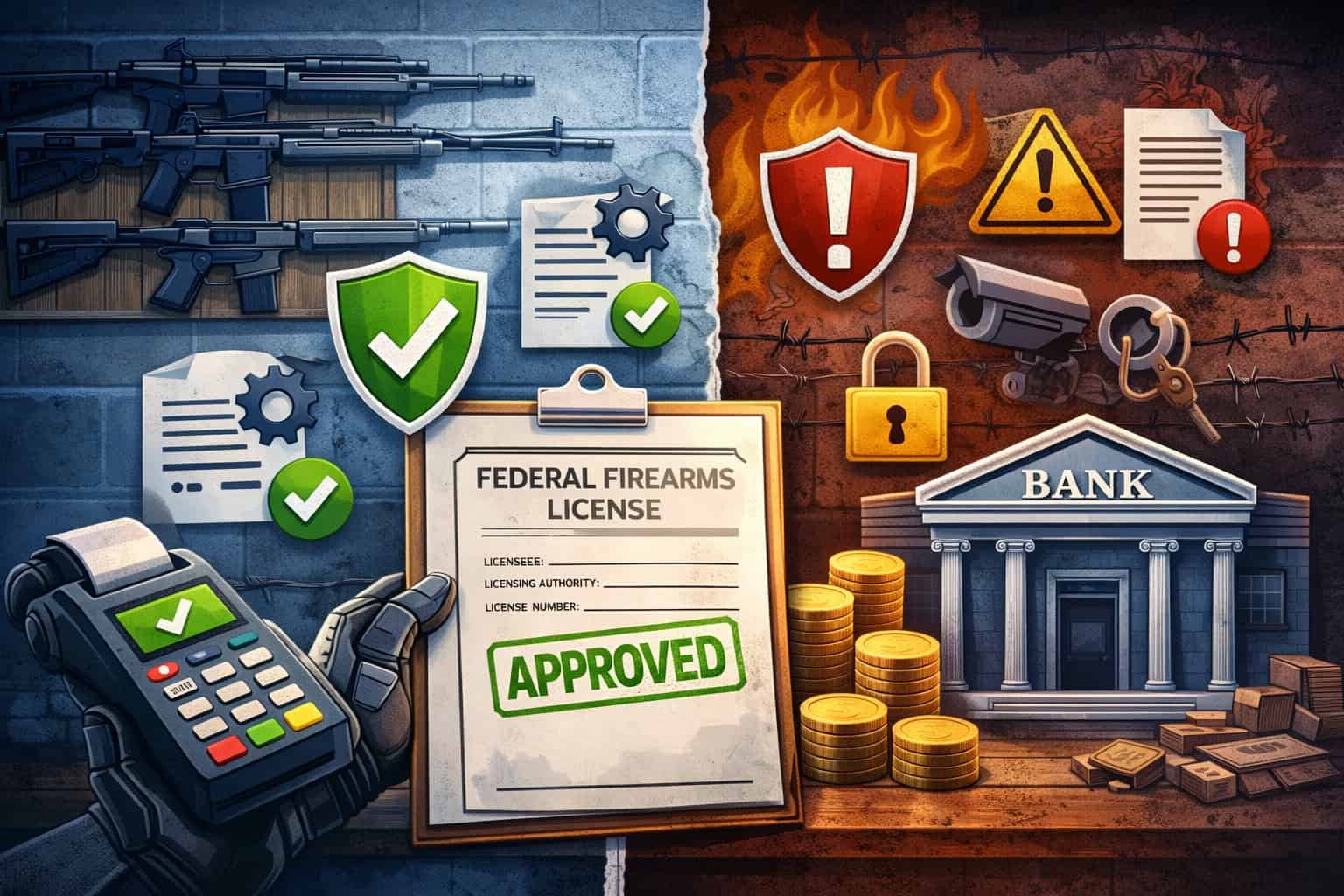
That is why Avoiding Firearms Merchant Account Termination is not just a payment topic. It is an operations topic, a risk topic, a customer experience topic, and a growth topic. If your business cannot process cards reliably, sales stall, payroll gets tighter, inventory planning becomes harder, and customer confidence can drop fast.
FFL holders, firearm retailers, and gun store operators face more scrutiny than many other merchants. That does not mean account trouble is inevitable. It does mean your business needs stronger controls, clearer documentation, cleaner website practices, better fraud tools, and a processor that actually understands high-risk payment processing for FFLs.
This guide explains what termination means, why it can happen suddenly, and what you can do to reduce the odds of a shutdown.
It also covers FFL Merchant Account Stability, Gun Dealer Merchant Account Protection, ways to Prevent Merchant Account Shutdown for Gun Stores, and the role of Firearms Payment Processing Compliance in keeping your account healthy over time.
Whether you are opening your first location or running an established firearm retail operation, the goal is the same: fewer surprises, lower payment risk, and a stronger long-term relationship with your processor.
What merchant account termination really means for an FFL business
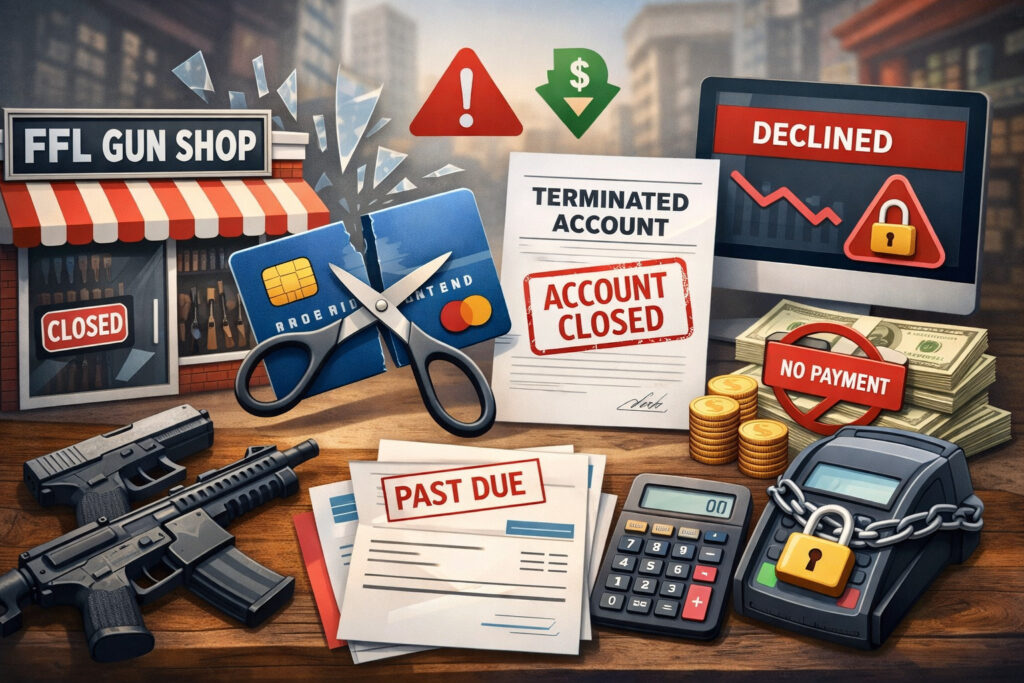
Merchant account termination is more than losing a way to accept cards. It is the loss of a core business function that touches sales, cash flow, customer trust, and daily operations.
A merchant account is the processing relationship that allows card payments to move from the customer’s card issuer to your business bank account. When that relationship is terminated, the processor may stop accepting new transactions immediately. In some cases, they may also hold funds, increase reserves, or trigger a deeper review of recent activity.
For firearm retailers, the impact is often bigger than many owners expect. A temporary processing interruption can affect in-store purchases, deposits, special orders, accessories, online sales, and card-on-file transactions. If a customer is ready to buy and your system fails at checkout, that lost sale may not come back.
Termination also tends to create downstream problems. A replacement processor may require more underwriting, more statements, more documents, and more explanation of why the prior account closed. That can make recovery slower and more expensive.
This is why FFL Merchant Account Stability should be treated as a strategic priority, not an afterthought. Stable processing supports inventory turns, staffing, recurring customer relationships, and better financial planning. It also gives your business more room to grow without constantly worrying that normal activity will be misread as suspicious.
Some processors use the words “termination,” “closure,” “suspension,” or “account deactivation” differently. From an operations standpoint, the practical issue is the same: the processor has decided your business is no longer within its acceptable risk tolerance, or it believes account activity no longer matches what it approved.
That is why prevention matters so much. Once an account is closed, your options narrow fast. It is far easier to protect a healthy account than to rebuild trust after a shutdown.
The difference between a temporary freeze, reserve action, and full termination
Not every payment problem means your account is permanently gone.
A temporary freeze usually means the processor has paused some or all funding while it reviews transactions, business practices, or documentation.
This can happen after a fraud spike, a sudden increase in volume, or a compliance concern. In some cases, processing continues but payouts slow down. In others, both sales acceptance and funding are affected.
Reserve action is different. A processor may decide to hold back a portion of each batch or maintain a rolling reserve to protect itself against chargebacks, refunds, or regulatory risk.
This does not always mean the account is in immediate danger, but it is often a sign that the processor sees more exposure than before. If you notice a reserve change without a clear explanation, pay attention.
Full termination is the most severe outcome. That is when the processor ends the relationship and stops supporting the account. At that point, your business may lose gateway access, payment acceptance, and regular funding. Depending on the situation, held funds may remain under review for a period of time.
The reason this distinction matters is simple: warning signs often show up before full termination. A funding delay today can become a reserve next month and a closure later if the root cause is never fixed. Knowing where your account stands helps you respond before the situation escalates.
Why terminations can feel sudden even when risks were building for months
Many gun store operators say the same thing after a processor shuts them down: “It came out of nowhere.”
From the processor’s perspective, it often did not. Risk scores may have been rising quietly behind the scenes for weeks or months. Underwriting teams may have noticed mismatched products on your website, an unusual run of refunds, inconsistent transaction sizes, missing licenses, or card-not-present activity that no longer matches the approved profile.
What makes it feel sudden is that processors do not always explain concerns in real time. Some issues are reviewed internally before a merchant is contacted. Other issues are triggered automatically by monitoring systems. You may only hear about the problem once thresholds are crossed.
Firearms businesses are especially vulnerable to this gap because payment processor monitoring is often strict. If your account was approved based on limited information, or by a general processor that does not fully understand firearms transaction compliance, the risk of a delayed reaction rises.
The processor may approve you initially, then become uncomfortable once it sees what you actually sell, how you sell it, and where transactions come from.
That is why a quiet account is not always a safe account. Stability comes from alignment. Your underwriting file, website, transaction patterns, business documents, refund practices, and fraud settings should all tell the same clear story. When they do not, sudden action becomes much more likely.
Why FFL Merchant Account Stability matters far beyond payment acceptance

A lot of merchants think about payment processing only when rates, equipment, or approvals come up. For firearm retailers, that is too narrow. FFL Merchant Account Stability affects nearly every moving part of the business.
Cash flow is the most obvious area. If card funding slows down or stops, the impact can show up immediately in purchasing, payroll, rent, event planning, and vendor payments. Even strong businesses can feel pressure quickly when a large share of daily revenue is delayed or held. Stable processing keeps routine operations predictable.
Customer trust is another major factor. Shoppers notice payment friction. If cards are declined because of gateway issues, if online checkout fails, or if refunds take too long due to processor holds, customers may start to question the business even when the problem was caused by the processor. Payment reliability is part of your brand, whether customers think about it that way or not.
Long-term growth also depends on account health. A processor that understands firearm retailer payment solutions is more likely to support expansion into e-commerce, phone orders where permitted, special-order deposits, multi-location operations, and event-based sales. A processor that sees your activity as confusing or risky may limit those opportunities.
Stability also improves decision-making. When you trust your payments setup, you can invest with more confidence. You can add inventory, launch promotions, refine your website, and plan staffing without wondering whether a normal sales increase will trigger a review.
On the other hand, unstable processing often creates defensive business behavior. Owners delay growth, avoid certain sales channels, or underinvest in customer convenience because they are afraid of getting flagged. That limits revenue and weakens competitiveness.
For all of these reasons, Gun Dealer Merchant Account Protection is not about avoiding a single bad event. It is about building a business that processors can understand, monitor, and support over time.
The hidden cost of payment instability for firearm retailers
The visible cost of a shutdown is easy to spot. You lose your ability to process. The hidden costs are often worse.
When a processor loses confidence in a firearms business, the first consequence may be friction rather than closure. Extra document requests consume staff time. Funding delays force owners to shift cash between accounts.
Reserve increases tie up working capital that could have been used for inventory or marketing. Fraud reviews can slow customer service and damage repeat business.
There is also the cost of distraction. Instead of focusing on merchandising, training, compliance, and customer relationships, the owner gets pulled into document collection, transaction explanations, and emergency processor shopping.
Managers may spend hours matching invoices, shipment records, and batch reports to answer underwriting questions.
If the account does close, replacement processing often comes with higher rates, tougher reserve terms, and more extensive business verification requirements. Prior closures can also increase scrutiny from future providers, especially if the original termination involved excessive chargebacks, policy violations, or undisclosed sales activity.
The lesson is clear: waiting until there is a problem is usually the most expensive approach. Strong account hygiene protects more than card acceptance. It protects time, margin, momentum, and operational focus.
How stable payment processing supports business continuity and growth
Stability creates options. When your account is well-managed and your processor understands your business model, you gain flexibility that many merchants take for granted.
A stable account supports smoother inventory planning because you can rely on funding timelines. It supports better customer service because refunds, adjustments, and special-order deposits can be handled consistently.
It supports marketing because promotional spikes are less likely to trigger alarm if the processor already understands your normal sales cycles and product mix.
This matters even more for businesses with multiple channels. A store with walk-in traffic, web sales, phone-based accessory orders, and occasional event transactions needs a processor relationship built for complexity. If the processor only approved a narrow version of the business, any channel expansion can look like suspicious behavior.
Growth also becomes easier when you have a history of clean processing. Low chargebacks, strong fraud controls, accurate descriptors, and prompt communication all strengthen underwriting confidence. Over time, that can lead to better support, fewer disruptive reviews, and more resilience during volume changes.
Stable processing is not luck. It is the result of transparency, control, and ongoing maintenance. The more intentional you are, the less likely your processor is to be surprised by your business.
The most common reasons firearms merchant accounts get shut down or frozen

Most account closures are not random. They usually trace back to a handful of recurring issues, many of which can be prevented.
One of the biggest causes is a mismatch between what the processor thought it approved and what the business is actually doing. Maybe the application described a retail storefront, but the processor later sees a large share of card-not-present transactions.
Maybe the site starts selling additional items the underwriter did not expect. Maybe special-order deposits or event sales begin showing up in ways that were never disclosed.
Another common issue is excessive chargebacks. High disputes can signal customer confusion, weak fraud controls, slow fulfillment, unclear billing descriptors, or product dissatisfaction.
For processors, chargebacks are one of the fastest ways to reevaluate risk. A firearms merchant account with frequent disputes often moves to enhanced monitoring quickly.
Fraud flags are another major trigger. Large orders with mismatched billing and shipping details, repeated failed attempts, unusual velocity patterns, or a sudden increase in manually keyed transactions can all cause concern. Processors do not need proof of fraud to act. Suspicious transaction monitoring alone may lead to holds or reviews.
Website issues also matter more than many merchants realize. Missing policies, vague product descriptions, unclear age-related restrictions, poor contact details, or confusing checkout flows can all raise questions during underwriting or monitoring.
If your website does not clearly explain what you sell and how you handle orders, your account may look riskier than it really is.
Documentation gaps are equally important. Expired licenses, outdated ownership information, inconsistent bank records, missing supplier invoices, or incomplete business verification requirements can turn a routine review into a serious account problem.
Then there are processor policy violations. These may include using the wrong MCC, processing transactions for another business, hiding products, or allowing prohibited product confusion to creep into the account.
Even if the business did not intend to mislead anyone, processors often react strongly when the approved profile no longer matches reality.
To Prevent Merchant Account Shutdown for Gun Stores, owners need to understand that payment risk is cumulative. One issue may not close the account. Several unresolved issues at once often do.
Underwriting mismatches and undisclosed business activity
Merchant account underwriting is based on trust, documentation, and a defined business profile. When that profile is incomplete or outdated, your risk rises immediately.
A common problem happens at signup. The business describes one sales model but later operates in several. Maybe you initially applied as a physical retail store, then added web orders, phone payments, curbside pickup, trade-in activity, or event-based sales.
None of those changes may feel dramatic from the owner’s side. To the processor, they can represent a major change in risk.
Undisclosed activity often causes trouble because processors rely on the original file when reviewing live transaction behavior. If the business begins accepting payments in ways the underwriter did not expect, monitoring systems may flag the account for review.
The processor may assume the merchant withheld information, even if the issue was simply poor communication.
The same problem can happen with product mix. If your site or receipts suggest one type of sale, but marketing content, special-order workflows, or catalog listings suggest another, the processor may question whether it truly understands the business. That uncertainty alone can lead to reserve increases or termination.
The fix is not complicated, but it requires discipline. Update your processor when sales channels change. Tell them if average tickets rise. Tell them if you launch new categories, start taking deposits differently, or add recurring billing for memberships or services.
A gun-friendly payment processor usually handles these updates more effectively than a general provider that lacks firearms experience.
Excessive chargebacks, fraud flags, and refund-heavy activity
Chargebacks are one of the clearest signals a processor uses to measure merchant risk. For firearm retailers, they are especially important because a dispute trend can suggest a deeper problem with fraud controls, delivery practices, or customer communication.
Many disputes begin before the cardholder ever contacts the bank. A confusing receipt descriptor, delayed special-order timing, unclear refund terms, or a customer who forgot the purchase can all turn into a chargeback. Online and phone-based orders add another layer of risk because card-not-present transactions are easier to question later.
Refund-heavy activity also raises concern. On its own, a refund is not always a bad sign. But when refunds start climbing alongside disputes, failed delivery attempts, or large-ticket sales, the processor may worry that the business is unstable or that fraud is being attempted. A sudden jump in reversals can also look like operational breakdown.
Fraud flags intensify this. Repeated AVS mismatches, CVV failures, unusual transaction times, rapid multiple attempts, or orders that do not fit past patterns can all trigger internal reviews. If staff members override too many warnings or manually key in transactions without strong controls, the risk gets worse.
Chargeback prevention for gun stores is not about winning more disputes after they happen. It starts earlier. Clear descriptors, strong order confirmation, delivery verification, documented customer communication, fraud screening, and consistent refund handling all matter.
Businesses that combine those basics with regular review of dispute patterns usually build better long-term payment stability.
Why Firearms Payment Processing Compliance shapes account approval and long-term account health
Compliance is not just a startup hurdle. It is an ongoing condition of keeping your account alive.
Many merchants focus on getting approved, then assume the hard part is over. In reality, Firearms Payment Processing Compliance continues throughout the life of the account.
Processors review websites, transaction patterns, documentation, and customer complaint data long after onboarding. If the business stops matching the approved profile, compliance concerns can surface quickly.
For FFL businesses, compliance often includes more than basic identity checks. Processors want to see that the business is legitimate, transparent, and controlled.
That means current licenses, matching business records, clear ownership details, consistent banking, and accurate descriptions of products and sales methods. It also means a site and checkout flow that are easy to understand.
Compliance affects approval because underwriters need confidence before they take on risk. It affects long-term account health because monitoring teams keep testing whether that confidence still makes sense. If your business evolves without updating the processor, account health weakens.
This is where many merchants get caught off guard. They assume compliance only means following card brand rules or completing a simple questionnaire. In practice, it also includes maintaining a business presence that supports ongoing risk review.
Your site, policies, contact details, shipping workflow, refund process, and transaction records all contribute to the processor’s picture of your business.
A weak compliance posture does not always create immediate termination. More often, it creates vulnerability. The account becomes easier to freeze during a review, easier to place on reserve, and harder to defend when transaction activity changes.
By contrast, strong compliance reduces friction. It helps underwriters understand your business faster, gives monitoring teams fewer reasons to escalate concerns, and supports Gun Dealer Merchant Account Protection over the long term.
The role of website disclosures, policies, and visible business details
Your website is often treated like a risk file that is always open.
Processors and underwriters review it during approval, during periodic monitoring, and sometimes after chargeback spikes or fraud alerts. If the site is incomplete, vague, or inconsistent with your application, it can create problems even when your in-store operations are strong.
Visible business details matter. Your site should clearly show the legal business name or an obvious connection to it, valid contact information, customer service channels, and consistent branding. If a cardholder sees one name on the site but another on the statement, confusion rises. That confusion can lead to disputes.
Policies are just as important. Processors want to see refund terms, order handling expectations, shipping or pickup information where relevant, privacy terms, and clear customer support paths. Missing or hard-to-find policies signal weak operational control. That may not seem fair, but it is how many monitoring teams assess merchant risk.
Product clarity matters too. A site that uses vague labels, incomplete descriptions, or unclear restrictions creates avoidable risk. The processor should never have to guess what your business sells or how a customer completes a purchase. Ambiguity often leads to prohibited product confusion or concerns about processor policy violations.
A clean website does more than help with marketing. It supports underwriting, reduces disputes, improves customer trust, and lowers the odds of sudden account review.
Why documentation gaps create avoidable payment risk
A strong firearms business can still look risky if its records are incomplete.
Processors often ask for documents at the worst possible time, usually when volume changes, disputes rise, or monitoring flags appear. If your business cannot quickly provide what is needed, the processor may assume the risk is higher than it actually is. That can lead to funding delays, reserve adjustments, or account suspension.
Common documentation issues include expired licenses, outdated ownership records, missing voided checks, old bank statements, incomplete supplier invoices, and mismatched addresses across business filings. Even small inconsistencies can create friction if they suggest the processor’s file is stale or inaccurate.
Documentation also matters in transaction reviews. If you cannot connect large orders to invoices, delivery confirmation, customer approvals, or order notes, fraud risk looks worse. If refunds are issued inconsistently and not documented well, the processor may question your internal controls. If special orders are common but timelines are poorly recorded, dispute exposure goes up.
The best approach is simple: maintain a current processor file before anyone asks for it. Keep licenses current, save major invoices, document unusual transactions, and centralize the records most likely to be requested during a review. This kind of preparation reduces panic and improves response speed when underwriting questions come in.
Gun-friendly processors vs general processors: why the difference matters
Not all processors are built to support firearms businesses in the same way.
A general processor may technically approve your account, but that does not always mean it truly understands the business.
It may have limited experience with firearms merchant account risk, special-order deposits, event-based transactions, higher average tickets, or the operational differences between in-store and card-not-present activity. That gap often shows up later during monitoring.
A gun-friendly payment processor usually starts from a better risk framework. It understands that firearm retailers require tighter underwriting, more careful documentation, and clearer transaction patterns.
More importantly, it expects those realities from the beginning. That reduces the chance that normal business activity will be misread as suspicious or noncompliant.
This difference affects more than approval odds. It affects day-to-day account management, communication quality, reserve decisions, and how your business is handled during reviews.
A processor familiar with merchant services for gun dealers is more likely to ask the right questions early, set realistic expectations, and recommend appropriate fraud tools and account settings.
A general processor may offer attractive pricing or fast onboarding, but if it lacks a genuine risk appetite for firearm retailer payment solutions, that early convenience can become expensive later.
Sudden funding holds, contract disputes, and account closures often happen when the provider approved the account without fully aligning its internal risk policies.
That is why choosing a processor should never be based on rate alone. Fit matters. Experience matters. Policy alignment matters. A payment relationship that looks cheap upfront can become very costly if it creates long-term instability.
Questions to ask before choosing a processor for a firearms business
A stable account often starts with better questions during the sales process.
Do not stop at pricing or approval time. Ask whether the provider actively supports firearms businesses and what documentation it requires during onboarding.
Ask how it handles rolling reserves, chargeback thresholds, fraud monitoring, and sales channel changes. Ask what happens if your average ticket increases or if you add a new web checkout flow.
You should also ask how ongoing monitoring works. Will the business have an account manager who understands firearms transaction compliance, or will reviews be handled by a generic risk team unfamiliar with your operations? That difference can matter a lot during time-sensitive issues.
Website expectations are another critical topic. Ask what disclosures, policies, and product details need to be visible. Ask whether certain accessories, deposits, or order structures require advance notice. Ask how the processor wants you to report business changes. A good provider will give specific answers, not vague reassurance.
Finally, ask about statement descriptors, gateway tools, AVS and CVV settings, PCI compliance expectations, and dispute support. These are not minor technical details. They are part of the overall framework for FFL Merchant Account Stability.
A processor that welcomes detailed questions and answers them clearly is often a better long-term fit than one that rushes you toward an application without discussing risk.
Warning signs that a processor may not be the right fit
Sometimes the wrong processor tells on itself early.
One warning sign is vagueness. If the sales rep says your business is “totally fine” but cannot explain policy rules, underwriting steps, or fraud controls in detail, be cautious. A good fit usually comes with specific guidance, not generic promises.
Another warning sign is reluctance to discuss reserves or monitoring. Every processor has risk policies. If a provider avoids the topic entirely, that does not mean reserves will not happen. It may mean they do not want to explain how they handle risk until later.
Watch for inconsistency too. If one person says your web sales are approved, but another says the account is retail-only, you may be dealing with internal confusion that could surface after activation. The same applies if the provider seems unclear about what products are supported or what website disclosures are required.
Fast approval with minimal review can also be a danger sign. For a firearms business, careful underwriting is usually healthier than instant approval. A processor that barely checks your business during onboarding may also be the kind that reacts aggressively once monitoring begins.
The goal is not just to get approved. It is to get approved by the right provider, on the right terms, with the right expectations set from day one.
Practical strategies for Gun Dealer Merchant Account Protection
Protecting your merchant account is not about one magic solution. It is about building layers of trust and control that make your business easier to underwrite and safer to support.
Start with transparency. Your application, website, product mix, sales channels, and expected processing volume should line up clearly. If your business changes, update the processor quickly. Surprises are one of the fastest ways to create risk reviews.
Next, strengthen documentation. Keep licenses current, maintain organized records, save invoices and delivery proof, and document any transaction that falls outside normal patterns. Good records help you answer processor questions faster and defend your business more effectively during reviews.
Fraud controls matter just as much. Use a secure payment gateway, enable AVS and CVV checks, review velocity rules, and establish approval steps for higher-risk orders. Firearms businesses should not rely on manual judgment alone, especially when card-not-present risk is involved.
Customer communication is another protection layer. Clear refund terms, order confirmations, support contact information, and accurate billing descriptors reduce confusion before it becomes a dispute. Many chargebacks happen because the customer does not understand what happened, not because the business acted improperly.
Internal training also plays a big role. Staff should know when to escalate unusual transactions, how to verify customer information, how to avoid unsafe overrides, and how to document exceptions. Weak staff handling can create account risk even when management has good policies.
Finally, communicate with your processor like a partner. Tell them about expected sales spikes, website changes, new locations, or channel expansion before those changes show up in the data. That kind of proactive communication is a major part of Gun Dealer Merchant Account Protection and long-term account health.
Building better internal controls for fraud, refunds, and transaction review
Internal controls are where account protection becomes real.
Every firearms business should define clear rules for transaction acceptance, especially for manually keyed payments, large tickets, expedited requests, split shipments, and unusual customer behavior.
Staff need to know what is normal, what requires extra review, and what should be declined outright. Without that structure, risky transactions slip through too easily.
Refund handling deserves just as much attention. Excessive refunds can weaken processor confidence, especially when paired with rising disputes or inconsistent order documentation.
Your business should have a clear refund process, consistent timelines, and internal notes explaining why each exception occurred. That helps reduce customer confusion and supports account freeze prevention.
Transaction review should not be limited to fraud alerts generated by the gateway. Managers should regularly scan for changes in average ticket, unusual sales hours, repeat declines, multiple cards used by one buyer, and orders that do not match past patterns.
Suspicious transaction monitoring works best when automation and human judgment support each other.
The key is consistency. Processors trust businesses that show repeatable, controlled behavior. Strong internal policies turn your risk management from reactive to proactive, which is exactly what stable merchant account relationships need.
Why communication with your processor should be proactive, not reactive
Many merchants only contact their processor when something goes wrong. That is a mistake.
Proactive communication builds context, and context reduces risk. If your processor already knows that you are launching a new website, running a major promotion, attending an event, or expecting seasonal volume changes, those transactions are less likely to be viewed as suspicious. Without that context, ordinary growth can trigger unnecessary concern.
This matters especially for businesses that evolve over time. If you add online checkout, change gateways, move locations, update ownership, or adjust your sales model, your processor should hear it from you first. Waiting until a monitoring alert appears makes the update feel reactive and defensive.
Good communication also improves problem resolution. When an underwriter or risk analyst sees that your business has a track record of clear, timely updates, they are often more willing to work through issues before escalating to drastic action. Trust matters on both sides.
A strong processor relationship should include regular touchpoints, especially after major changes. You do not need to overcommunicate every minor detail. But you do need to keep the provider informed about anything that changes risk, customer experience, or transaction behavior.
How to Prevent Merchant Account Shutdown for Gun Stores across every sales channel
Firearms businesses often process payments in more than one way. That adds convenience for customers, but it also increases risk if each channel is not managed carefully.
In-store transactions usually have the lowest fraud exposure because the card is present, the buyer is face to face, and identity checks are easier to support. Even so, in-store activity can still create problems if staff manually key too many payments, override warnings, or process transactions outside the approved business model.
Online sales introduce higher risk because card-not-present transactions depend more heavily on data checks, fraud filters, order review, and customer communication. A weak checkout flow, vague product pages, missing policies, or poor delivery documentation can create both dispute risk and processor concern.
Phone orders can be even more sensitive. Because details are spoken rather than entered by the customer, errors and fraud risk increase. Businesses that accept phone payments need clear staff procedures, stronger verification steps, and tighter limits around when these transactions are allowed.
Special-order deposits create another challenge. They can be legitimate and common, but they often involve longer fulfillment timelines, larger tickets, and more customer misunderstanding. Without written confirmation, delivery expectations, and refund rules, disputes can climb fast.
Event-based sales also deserve attention. Portable setups, new staff, variable connectivity, and unusual volume patterns can all look risky to a processor if not planned in advance. If your account normally processes from one location and suddenly runs large batches elsewhere, payment processor monitoring may respond quickly.
To Prevent Merchant Account Shutdown for Gun Stores, each channel needs its own controls, but all channels must still fit the same overall risk profile. The processor should understand how you sell, and your internal policies should match that explanation.
Risk factors in online, phone, and special-order transactions
Card-not-present activity requires extra discipline because the processor sees more uncertainty in every transaction.
Online orders carry obvious risks like stolen card use, mismatched billing data, proxy orders, and rushed shipment requests. But some of the biggest risks are operational.
Poor product descriptions, weak fraud settings, unclear timelines, and missing support details make it easier for customers to dispute legitimate purchases later. Firearms payment processing compliance depends heavily on clarity in digital channels.
Phone orders are riskier because staff involvement can vary widely. Without strong scripts and verification rules, employees may accept incomplete details, fail to document consent, or process borderline transactions just to save a sale. Those problems may not show up until a chargeback lands or a processor asks why manually entered transactions are climbing.
Special-order payments are especially vulnerable when expectations are not set properly. If the customer does not understand lead times, deposit terms, cancellation rules, or pickup requirements, refund pressure and disputes can increase. Processors notice that pattern quickly, especially when high-ticket transactions are involved.
To reduce these risks, businesses need written procedures, clear confirmation messages, good records, and firm review standards for anything unusual. Strong verification and communication turn these channels from liability points into controlled revenue streams.
Risk factors in in-store and event-based sales
In-store sales are generally more stable, but they are not risk-free.
Problems often begin when staff bypass best practices. Manually entering card numbers because a chip did not read, splitting transactions in odd ways, accepting inconsistent ID information, or rushing checkout during busy periods can all weaken your risk posture. Even one store with loose controls can affect the whole merchant account.
Event-based sales bring different challenges. Mobile terminals, temporary staff, unfamiliar customers, and location changes can all increase risk.
If your processor approved you based on a fixed retail environment, large event batches may trigger questions unless they were disclosed in advance. Sudden geographic changes can also look suspicious in automated systems.
Connectivity problems can make event transactions more complicated too. Offline processing, delayed batching, or duplicated attempts can create confusion that later turns into chargebacks. Staff training matters a lot in these environments because mistakes tend to happen faster when conditions are less controlled.
The best safeguard is preparation. Tell your processor about events ahead of time, train staff on terminal procedures, document location details, and review batches immediately after the event. Event-based selling can be profitable, but only when it fits cleanly within your approved processing profile.
The tools and controls that reduce payment risk before processors step in
Processors want to see that your business is actively reducing risk, not just reacting after problems occur.
That starts with PCI compliance. Many merchants treat PCI as a checkbox, but it is a core part of secure payment handling.
A business that stores card data improperly, uses outdated systems, or neglects security controls exposes both itself and the processor to unnecessary risk. Payment processing best practices for firearms businesses should always include a current PCI posture.
A secure payment gateway is another key layer. The right gateway can support AVS, CVV, velocity checks, transaction filters, device intelligence, tokenization, and better recordkeeping. These tools help detect fraud before it becomes a dispute and show the processor that your business takes risk seriously.
Accurate transaction descriptors also matter more than many merchants realize. If the statement name does not look familiar to the customer, “friendly fraud” becomes more likely. A clear descriptor reduces confusion and lowers dispute risk.
Delivery verification is critical for shippable goods and special orders. Signed proof, pickup confirmation, order acceptance records, and customer communication history can all help support a transaction if it is questioned later. The same goes for order confirmation emails and written timelines.
Internal policies complete the picture. Staff should know how to respond to AVS mismatches, when to decline manually keyed sales, how to escalate high-risk orders, and how to document exceptions. Technology alone is not enough. It works best when backed by disciplined human processes.
All of these controls support Avoiding Firearms Merchant Account Termination because they reduce the events processors care about most: fraud, disputes, confusion, and unexplained behavior.
AVS, CVV, secure gateways, and billing descriptors
These tools are not just technical features. They are evidence of risk control.
AVS helps compare the billing address entered during checkout against the address on file with the card issuer. CVV checks confirm that the cardholder likely has the card details in hand.
Neither tool catches every bad transaction, but together they create a basic screening layer that processors expect to see, especially for card-not-present risk.
A secure payment gateway adds more than transaction routing. It can enforce fraud rules, capture logs, support tokenization, and reduce manual handling of sensitive card data. This helps with both fraud prevention and PCI compliance. A weak or poorly configured gateway does the opposite by creating blind spots that only become visible after disputes rise.
Billing descriptors are often overlooked, yet they are directly tied to chargeback prevention for gun stores. If the name on the customer’s statement is unclear, abbreviated badly, or unrelated to the storefront brand they remember, legitimate sales may still turn into disputes. A clear, recognizable descriptor can reduce avoidable chargebacks significantly.
These are foundational tools. They will not save an account by themselves, but without them, even a well-run business becomes harder for a processor to trust.
Delivery verification, receipts, and internal documentation standards
A transaction is much easier to defend when the paperwork is clean.
For shipped or pickup-related sales, delivery verification shows that the order reached the intended destination or was collected according to policy. This can include signed confirmation, tracking delivery records, pickup acknowledgment, or internal release documentation. The details matter because vague records are less helpful during disputes.
Receipts should also be clear and consistent. They should match the business name customers know, reflect the correct amounts, and connect logically to the products or services purchased. Confusing receipts create unnecessary questions, especially when a customer reviews the charge weeks later.
Internal documentation standards are where strong businesses separate themselves from reactive ones. Large transactions, unusual orders, manual approvals, and refund exceptions should all leave a clear paper trail. If a processor or issuing bank asks what happened, you should be able to answer quickly with supporting records.
Documentation does not eliminate risk, but it makes risk easier to manage. It reduces panic during reviews, improves dispute response, and supports account freeze prevention by showing that the business operates in a controlled, traceable way.
Merchant account closure warning signs every gun store should monitor
A processor rarely goes from silence to termination with no signals at all. The signs are often there, but they are easy to dismiss until the situation becomes serious.
One common warning sign is a funding delay that does not have a clear operational cause. If batches were closed correctly and deposits still slow down, it may mean the account is under review. A one-time delay can happen. Repeated delays deserve attention.
Reserve changes are another major signal. If a rolling reserve is added, increased, or extended without strong explanation, the processor is telling you that perceived risk has changed. That does not automatically mean closure is coming, but it does mean confidence has weakened.
Increased document requests are also important. Processors may ask for updated licenses, bank statements, supplier invoices, order records, or website clarification. Taken alone, that may be routine. But if these requests become more frequent, more urgent, or more detailed, your account may be moving into deeper scrutiny.
You should also watch for unusual compliance reviews, requests about product categories, sudden questions about your website, or concerns about transaction patterns that previously caused no issue. These often appear when internal monitoring flags behavior that no longer fits the account profile.
Other warning signs include higher decline rates, held batches, gateway restrictions, extra fraud alerts, or customer complaints about descriptors and delays. None of these should be ignored.
The goal is not to panic every time something changes. It is to treat changes as data. Businesses that respond early often have a better chance of stabilizing the relationship before termination becomes likely.
How to respond when warning signs appear
The worst response to a warning sign is avoidance.
When funding slows, reserves change, or a processor requests extra information, respond quickly and professionally. Do not send partial answers if you can avoid it.
Gather the requested documents, organize them clearly, and explain anything unusual in a direct, factual way. A messy response can create more concern than the original issue.
At the same time, perform your own internal review. Look at recent chargebacks, refunds, volume spikes, unusual orders, website changes, and staff behavior. Ask whether anything about the business has changed without being communicated properly. Processors often see patterns that merchants miss because no one stepped back to review the full picture.
It is also smart to check your public-facing materials. Confirm that website policies are current, contact details are visible, descriptors are accurate, and product presentation still matches your approved model. Small inconsistencies can become bigger issues during active reviews.
Most importantly, avoid defensiveness. The goal is not to argue that the processor should trust you automatically. The goal is to show that your business is organized, transparent, and serious about fixing anything that creates confusion or risk.
When reserve changes and compliance reviews signal deeper risk
A reserve change is often treated like a pricing issue. It is usually more than that.
When a processor imposes or increases a rolling reserve, it is protecting itself against potential future losses. That means it sees a higher chance of chargebacks, refunds, or other exposure than before.
The root cause could be disputes, volume changes, product concerns, fraud indicators, or uncertainty about your business model. The reserve is the symptom, not the disease.
Compliance reviews can signal something similar. If the processor starts asking detailed questions about website content, order methods, product listings, or documentation, it may be reassessing whether the account still fits policy. This happens often when the business changes over time without clearly updating the underwriter.
Taken together, reserve changes and compliance reviews often indicate a shift in processor confidence. That does not guarantee termination, but it is the stage where decisive action matters most. Businesses that treat these as routine annoyances may miss the opportunity to restore trust before more severe action is taken.
Common mistakes that increase the risk of merchant account termination
Many account problems come from avoidable mistakes rather than dramatic violations.
Using the wrong MCC is one of the biggest. If the business is classified inaccurately, the processor may price or monitor the account based on the wrong assumptions. That mismatch can create trouble later, especially when live transaction patterns do not fit the expected profile.
Hiding business details is another dangerous mistake. Some merchants downplay parts of the business to make approval easier. Others leave out online sales, special orders, or event activity because they do not think it matters. It does matter. Incomplete disclosure often looks like deception once monitoring begins.
Poor website disclosures create problems too. Missing refund policies, weak contact information, vague product presentation, and unclear order steps all increase the chance of disputes and compliance concerns. Your website should reduce uncertainty, not create it.
Weak fraud settings are equally risky. If AVS and CVV checks are loose, if manually keyed transactions are common, or if the gateway is not configured for suspicious transaction monitoring, fraud exposure rises quickly. Excessive refunds and unresolved chargebacks make the picture worse.
Ignoring contract terms is another frequent problem. Merchants often sign processing agreements without fully understanding reserve triggers, prohibited activity, reporting obligations, or termination clauses. That can leave them unprepared when enforcement begins.
Even successful businesses can run into trouble when they move fast and let payment risk management fall behind. The solution is not fear. It is regular review, honest disclosure, and stronger systems.
The danger of hiding business details or letting your profile go stale
Some merchants only think of disclosure during onboarding. That is not enough.
A merchant profile can go stale in many ways. The business adds a new website, changes ownership structure, expands product lines, processes more event sales, or starts accepting more phone orders. None of those changes may feel dramatic internally. To the processor, they can represent a completely different risk picture.
When the processor learns about these changes from monitoring rather than from you, trust drops. Even if the activity itself is allowed, the lack of disclosure becomes part of the problem. Processors want to know that merchants understand their reporting responsibilities and respect the approved account framework.
This is why hiding details is so dangerous. The issue is not just whether the activity was permitted. The issue is whether the processor feels it can rely on your disclosures going forward. Once that confidence is damaged, reviews get tougher and termination becomes easier.
Why ignoring chargeback trends and contract terms is costly
Chargebacks rarely stay small for long if no one investigates them.
A dispute rate that looks manageable one month can become a pattern over a quarter. The same reason code appearing again and again usually points to a fixable issue, such as unclear descriptors, weak fraud screening, delayed fulfillment, or poor communication.
Businesses that treat chargebacks as a cost of doing business often miss the fact that processors treat them as a signal of deteriorating account health.
Contract terms matter for the same reason. Many processors spell out reserve triggers, prohibited uses, reporting duties, and compliance expectations clearly. If you do not know those terms, you may accidentally create risk without realizing it.
By the time a reserve is imposed or the account is threatened, the processor may simply point back to the agreement.
The practical takeaway is that both chargebacks and contract terms require active management. One shows how the account is performing. The other defines how the processor is allowed to react.
A step-by-step checklist to audit your setup and reduce termination risk
The best way to lower risk is to review your setup before a processor forces the issue.
Start with your business profile. Confirm that your processor has your current legal entity details, contact information, ownership structure, bank account, licensing documents, website addresses, and active sales channels. If anything changed recently, update it.
Next, review your website. Check that business details are visible, policies are easy to find, descriptors align with branding, product information is clear, and checkout flows make sense. Remove anything confusing or outdated. A processor should be able to understand the business quickly by reviewing the site.
Then audit your transaction patterns. Look at average ticket size, refund rate, chargeback rate, manually keyed volume, card-not-present share, and unusual transaction times. Compare that activity to what your account was approved for. If you see drift, address it now.
Review fraud tools after that. Make sure AVS and CVV checks are active, gateway rules are still working, staff follow verification procedures, and suspicious orders are documented. Confirm PCI compliance is current and card data handling is secure.
Move on to documentation. Organize licenses, bank records, supplier invoices, order confirmations, delivery proof, refund logs, and special-order notes. If the processor asked for documents tomorrow, you should be able to respond quickly.
Finally, review your processor relationship. Read the contract, note reserve terms, identify reporting obligations, and schedule a check-in if the business has changed. Strong communication is part of payment risk management, not a separate task.
This checklist helps both new FFL businesses and established operators. Newer businesses use it to build a clean foundation. Established retailers use it to catch drift before it becomes a shutdown risk.
Quick audit checklist:
- Confirm licenses and business records are current
- Verify your processor file matches your current operations
- Review website policies, product clarity, and contact details
- Check descriptors for customer recognition
- Monitor chargebacks, refunds, and funding delays monthly
- Tighten AVS, CVV, and gateway fraud rules
- Review manually keyed and phone order procedures
- Document special orders and delivery verification
- Train staff on transaction exceptions and escalation rules
- Revisit processor terms, reserves, and prohibited activity rules
FAQ
Q.1: What is the biggest reason firearms merchant accounts get terminated?
Answer: The biggest reason is usually a mismatch between the approved merchant profile and actual business activity. That can include undisclosed sales channels, confusing website content, unexpected product mix, or transaction patterns that do not match underwriting expectations. Excessive chargebacks and fraud flags also play a major role.
Q.2: How can I Prevent Merchant Account Shutdown for Gun Stores if I already have an account?
Answer: Start by reviewing your website, business disclosures, transaction patterns, fraud tools, and documentation. Make sure your processor understands your current business model, including in-store, online, phone, special-order, and event-based activity. Then monitor chargebacks, refunds, funding delays, and reserve changes closely.
Q.3: What are the warning signs that my account may be at risk?
Answer: Common merchant account closure warning signs include slower funding, new rolling reserves, repeated document requests, deeper compliance reviews, unusual questions about your website, higher decline rates, or rising chargebacks. These signs do not always mean termination is imminent, but they should never be ignored.
Q.4: Why does Firearms Payment Processing Compliance matter after approval?
Answer: Approval is only the starting point. Processors continue monitoring websites, transaction behavior, disputes, fraud signals, and business records over time. If your business changes and the processor is not updated, long-term account health can weaken even if the original approval was solid.
Q.5: Is a gun-friendly payment processor really that different from a general processor?
Answer: Yes. A gun-friendly payment processor is more likely to understand firearms merchant account risk, special-order structures, card-not-present risk, documentation needs, and policy expectations. That understanding can reduce unnecessary reviews and improve long-term Gun Dealer Merchant Account Protection.
Q.6: Can chargebacks alone cause account termination?
Answer: Yes, they can. A high chargeback ratio signals higher processor exposure and often leads to closer review, reserve adjustments, or shutdown. Chargeback prevention for gun stores should include better descriptors, stronger fraud checks, clear customer communication, and solid delivery records.
Q.7: Do website issues really affect merchant account stability?
Answer: Absolutely. Missing policies, poor contact information, vague product descriptions, inconsistent branding, and confusing checkout flows can all raise risk concerns. Your website is one of the first things underwriting and monitoring teams review when assessing account health.
Q.8: What payment tools help reduce firearms merchant account risk?
Answer: Key tools include AVS, CVV checks, a secure payment gateway, PCI compliance controls, fraud filters, accurate statement descriptors, and delivery verification systems. These tools work best when paired with staff training and written internal procedures.
Q.9: How often should I review my merchant account setup?
Answer: At minimum, review it quarterly. Monthly review is even better for chargebacks, refunds, funding patterns, and fraud alerts. You should also review the account anytime you change websites, add new sales channels, expand product categories, or see warning signs from the processor.
Q.10: What is the best way to improve FFL Merchant Account Stability over the long term?
Answer: Be transparent, stay organized, and communicate early. Keep your processor file current, maintain strong compliance and fraud controls, train staff well, and monitor risk indicators before they become serious problems. Long-term stability usually comes from consistency, not quick fixes.
Conclusion
Avoiding Firearms Merchant Account Termination is not about finding a loophole or hoping your processor never looks too closely. It is about building a business that can stand up to scrutiny because the fundamentals are strong.
For FFL holders and firearm retailers, that means more than getting approved. It means maintaining FFL Merchant Account Stability through accurate disclosures, clean websites, organized documentation, smart fraud controls, and regular communication with a processor that truly understands the business. It means treating chargebacks, reserves, and document requests as signals worth acting on early.
It also means recognizing that processor trust is earned over time. Every clean batch, every accurate descriptor, every documented order, and every proactive update helps strengthen that trust. On the other hand, hidden business changes, weak policies, poor website presentation, and rising disputes slowly erode it until the account becomes vulnerable.
The good news is that most termination risk can be reduced with disciplined habits. Review your setup. Train your team. Monitor patterns. Fix confusion before it becomes a chargeback. Update your processor before normal business growth gets misread as suspicious activity.
A stable merchant account gives your business room to operate, serve customers well, and grow with confidence. In a high-risk environment, that kind of stability is not optional. It is one of the most valuable assets your business can protect.
Leave a Reply