
Setting up a merchant account for any firearms store is more complicated than for other types of businesses. Firearms are considered high-risk, which makes banks scrutinize an application very closely. Even fully legal stores can experience delays or rejections for this reason. Clear disclosure, proper documentation, and a processor for firearms will make the approval more attainable and far less complicated.
What to Expect from High-Risk Merchant Accounts?
The high-risk merchant account lets those businesses, which typically get rejected by most conventional banks, have the ability to accept debit and credit card payments. As a result, it opens up to them a greater customer base and eliminates their dependence on cash or very restricted modes of payment.
Most of them facilitate cross-border payment, which makes it easier to sell to customers in other countries and accept various currencies. Additionally, security is often stronger with high-risk providers. Given that these types of businesses are usually at higher risk for fraud and dispute cases, providers generally include advanced monitoring tools in them to secure transactions and customer data.
The other advantage is increased chargeback tolerance. Though chargebacks must always be kept under control, a high-risk provider understands that there are industries that would naturally have disputes and are less likely to shut down accounts due to minor increases.
However, these benefits come at a cost. Typically, high-risk merchant accounts have higher set-up fees, monthly charges, and transaction rates as compared with normal accounts. Many providers mandate a rolling reserve, in which a portion of each sale is held in reserve for a time period to manage risk for chargebacks. This might affect cash flow in the long run.
Additionally, settlement times can be much longer, and therefore, it might take a lot of time for money to arrive in your bank account. For enterprises relying on quick access to funds, this presents a problem. The terms and conditions of sale are often more strict, too. Compliance rules and fines for violation may form part of the contract, along with early cancellation fees.
Challenges Gun Stores Face When Applying for Merchant Accounts
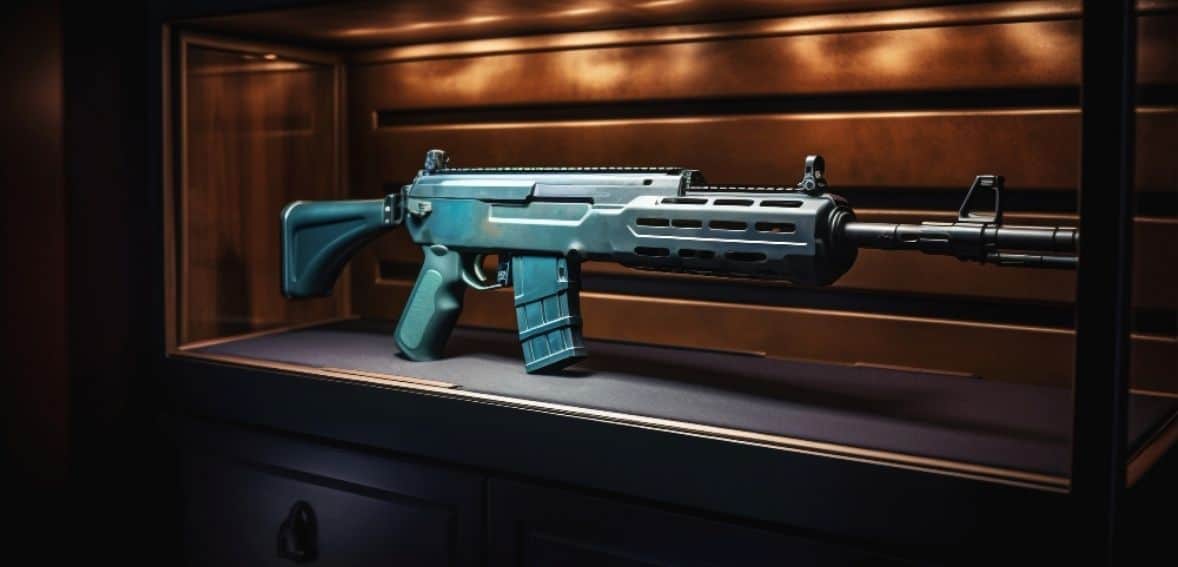
When one thinks about running a gun shop, it means there are additional hurdles that must be cleared when considering acquiring a merchant account. That is because the majority of financial institutions and payment service providers consider gun shops as high-risk businesses, not that the merchant or financial institution is doing anything wrong, but because the industry that the merchant operates in tends to receive more scrutiny compared to other industrial sectors. Firearms are closely regulated, public opinion can shift quickly, and rules can change without much notice.
Another typical problem might be the way the business looks to the public. Card networks and banks pay close attention to anything that could suggest legal or brand risk. If a gun store’s website, product descriptions, marketing language, or shipping policies are unclear or poorly explained, it can raise concerns. Even when a business follows all laws, a lack of clear compliance information can make it look risky. Banks want to avoid any chance of being linked to transactions that could later cause legal or reputational problems.
Another dominant factor is the online presence and the reputation of a gun store. Nowadays, financial institutions believe that each high-risk business should have a professional website with clearly specified details of the business. If the website seems unprofessional, partial, and vague, it raises suspicion. Additionally, negative feedback or complaints from customers served may raise a red flag indicating possible issues. A trend of frustrated customers would mean a likelihood of disputes or chargebacks, which would encourage the bank to deny a merchant account.
Financial history is another major factor. Banks verify both personal and business credit when taking on an application. If there is a history of late payments, unpaid debts, or previous chargeback issues, this raises a red flag. A poor credit profile indicates financial instability, making the payment providers nervous about taking the account, even if the gun store currently operates responsibly.
Strategies Gun Stores Use to Qualify for Merchant Accounts

It can seem like a very difficult task to gain approval for a merchant account as a gun store, but it is definitely achievable. While higher fees are common in high-risk industries, smart choices can help gun store owners secure payment processing, reduce problems, and protect long-term profits.
The first and most crucial thing that you need to do is to pick the correct payment provider. Not all payment providers comprehend the nature of the firearms-related business, and submitting an application to the wrong payment provider results in rejection.
Secondly, another method of optimizing the chances for approval is to cut down unnecessary layers in the payment system. Some payment setups include multiple intermediaries, each adding fees and delays. Reducing the layers by working closer to the processor or the acquiring bank can help cut down costs.
Thirdly, trustworthiness in support is also more valuable than many firearm business owners consider. Financial institutions focus on the quality of support when it comes to such issues as disputes, refunds, and support problems. An efficient and supportive supplier will be able to head off problems before they turn into chargebacks and negative reviews. Such support leads to less risk and a better reputation profile for the financial institutions.
Let’s not forget that fraud prevention is an important part of approval and account stability. By using technology that can identify when there is possible fraud, the risk of charge-backs can be decreased. When banks see that a gun store actively prevents fraud, their approval applications get a better chance of success.
It is also essential to remain compliant at all times. This means that the gun shops should periodically examine their security policies, online policies, and checkout procedures for conformity with PCI standards. These include clear terms and conditions, valid age verification, and clear product information, making the business appear safe and legitimate to payment providers.
Next, providing a mix of payment options can also be beneficial. The business can consider accepting credit cards, debit cards, and payment wallets. This will make the checkout process easier for customers and can result in increased sales. Moreover, at the same time, it shows that the business is focused on legitimate and standard payment methods.
Analyzing data to track transaction activity is yet another smart step. Monitoring chargeback ratio, success ratio, and customer activity will enable gun shops to rectify problems at a very early stage. This data can also be used to convince service providers of how efficiently and less riskily it operates as opposed to others in its sector.
Finally, managing disputes cannot be ignored. This is because gun shops that monitor and manage disputes effectively are considered more reputable businesses.
When gun stores follow these steps, they put themselves in a better position in the industry as well-organized, compliant, and respectable businesses. This makes it much simpler to attain and maintain a merchant account even in a high-risk industry like gun stores.
How to Reduce Friction During the Merchant Account Approval Process

One of the most powerful strengths you can have on your side is an effective payment history. If you have any experience with payments in the past, whether with a different platform, company, or business, it will help. This will show the banks that you are knowledgeable when it comes to payment processing and have managed transactions responsibly, with limited chargebacks or disputes.
Being fully prepared or having all the required documents at hand also ensures faster proceedings. The payment providers will typically request information such as your personal or business identification, taxation documents, information about your business processes, as well as prior processing statements, if you have any. Providing accurate information saves time during the underwriting process.
Your site and payment history must demonstrate that you prioritize security. Having a professional-looking site with policies, a secure checkout process, and proper compliance measures goes a long way in showing that your business is reputable and operates securely. Taking care that it meets PCI requirements and that it follows proper security best practices can go a long way in clearing up some concerns for banks.
Your reputation on the internet will also have an effect on the approval process. Reviews, rankings, and feedback from customers can help the processor determine how you treat your customers. Keeping your customers happy and resolving any issues efficiently will give the impression of lower risk for your business. Good documentation, strong security, and a strong reputation can go a long way in determining the speed and efficiency of a merchant account authorization.
What Gun Stores Should Look for in a Merchant Account Provider
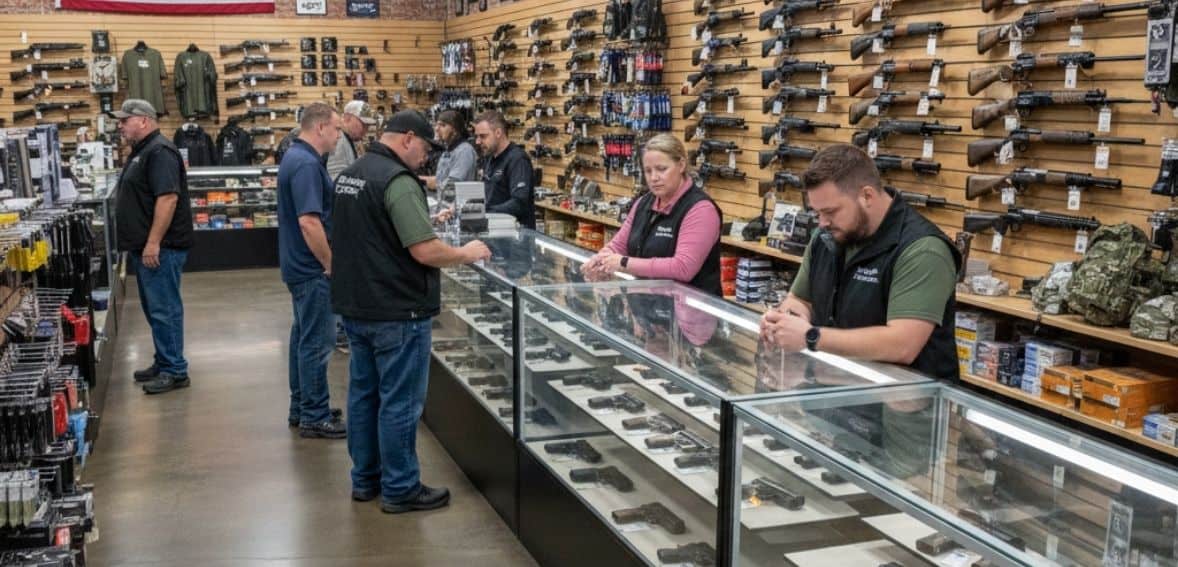
Selecting an appropriate merchant account service provider is one of the most critical considerations that a gun shop owner must make.
Firstly, begin by seeking out organizations that have familiarity with the firearms industry. A processor that already knows the gun industry would already understand the regulations, compliance requirements, and typical pitfalls. This would ensure that approvals are easier and there would be no unexpected account freezes or shutdowns.
Secondly, another element to consider is the transparency of fees. Fees tend to be higher for high-risk accounts, but they should not come as a surprise to you. A quality provider will take the time to clearly detail the fees for setting up the account, the costs of the account on a regular basis, fees per transaction, and so on. If the fees are confusing to understand, it could be a red flag.
Thirdly, contract flexibility also matters. Some high-risk providers lock gun store merchants into long contracts with heavy cancellation penalties. Look for a provider that offers fair terms and can adjust as your business grows or changes. Flexibility gives you more control and reduces long-term risk.
Always remember that experience and reputation matter and mustn’t be ignored. You should do background research on your provider before locking in the agreement. Other gun store owners’ reviews, testimonials, and feedback from within the industry provide a better insight into the processor service after they are approved.
Next, gun shops need strong security. Since this industry is so prone to chargebacks and fraud, your provider should keep an eye on suspicious transactions and protect customer data. Good fraud prevention keeps your account stable and reduces the risk in the eyes of the banks.
The next major factor we have is customer support. When issues come up, you need fast and reliable help. Providers that offer round-the-clock support through phone, email, or chat are much easier to work with, especially in a high-risk business where problems need to be resolved as soon as possible. Ensure the service provider’s payment gateway functions well with your website or point-of-sale system. Smooth integration reduces checkout issues and lost sales. Compatibility means the provider is able to support your particular business setup.
If your sales are online or to customers outside of your local area, international payment support can be a factor. Some providers can handle multiple currencies and cross-border rules, and some cannot. Finding a provider with such capability will safely build your gun store.
Let’s not forget that the service should integrate risk management tools. Features like chargeback alerts, dispute tracking, and suggestions on fraud reduction can save your merchant account over a period of time.
Lastly, always review the agreement carefully before signing. Look out for the fee, length of contract, terms of cancellation, and any clause affecting how your gun store will operate. A fair and straightforward agreement is a sure indicator that the provider is suitable for your business.
How to Keep Your Firearms Merchant Account Active and Secure
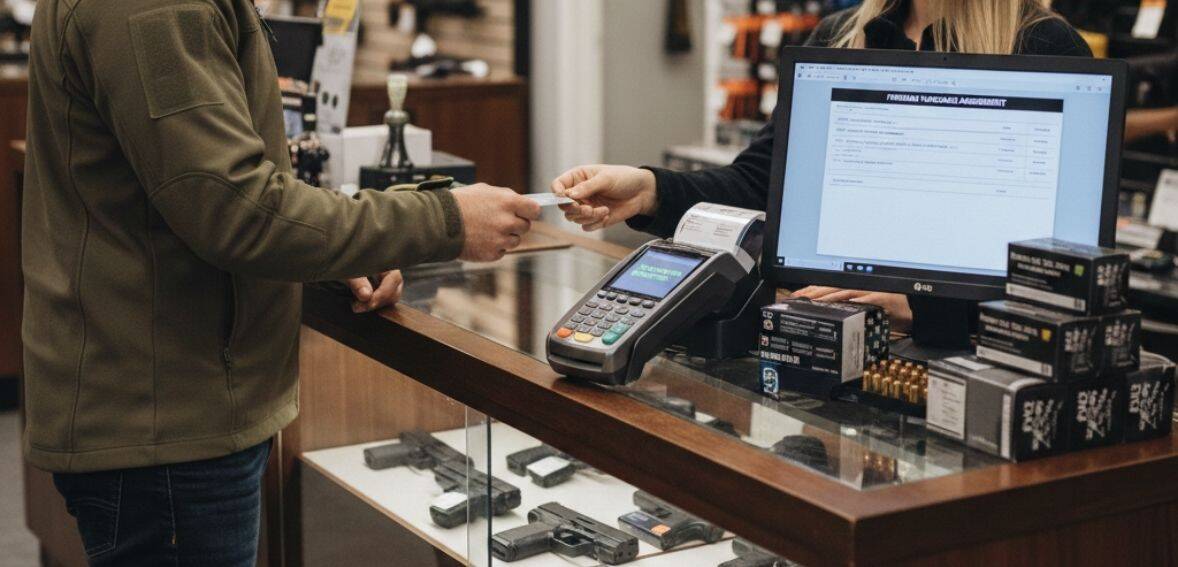
Now, once you have gotten your merchant account approved, the next big thing is to ensure that the account stays active. The fact is, the firearms business is closely monitored, and sometimes minor mistakes can lead to abrupt freezes and account closures. Fortunately, there are several measures you can consider to reduce this risk.
First of all, make sure that your account was properly underwritten when it was opened. The best accounts are those in which gun sales were brought to light before approval of said accounts. If your account was approved instantly without any questions or paperwork involved, it could be worth it to have it looked at.
Next, verify the classification of the. You should clearly understand how your processor has coded your business, what products the bank believes you sell, and whether firearms are specifically listed. This ensures that the service provider you choose is firearms-friendly.
Your website also plays a big role. Clear and visible policies around shipping, returns, refunds, and order timelines help customers know what to expect. This reduces misunderstandings and makes your business look more trustworthy to banks and processors reviewing your account.
Lastly, maintain good records on deposits and special orders. Many disputes arise from customers over delayed orders. Always provide written receipts, clear delivery timelines, refund terms, and proof that the customer agreed to the terms. Good documentation is much easier when trying to resolve disputes and avoid any issues with the account.
Being proactive, transparent, and well-documented pays a great deal in merchant account stability and the prevention of shutdowns in the future.
Conclusion
Processing approval for gun shop merchant accounts requires a certain amount of preparation and openness with the right payment partner. Even though the requirements seem quite strict, they are necessary to ensure the risks associated with gun shop businesses are well managed.
FAQs
Why do gun stores find it difficult to get a merchant account?
Banks classify firearms as high-risk due to regulations, chargebacks, and public scrutiny; approval conditions may be stricter than those of average businesses.
Can every gun store get approved for a merchant account?
Yes, most legal gun stores can obtain a high-risk merchant account with proper documentation, disclosure, and a firearms-friendly provider.
What documents are required for approval?
Business licenses, tax records, identification, compliance policies, and past payment processing history would guarantee the credibility of a company to banks.
How do gun stores avoid account shutdowns?
Good security, fraud prevention, clear policies, proper documentation, and transparent operations will reduce disputes and the risks related to chargebacks.
Are the fees higher for firearms merchant accounts?
Of course, high-risk accounts usually come with higher setup, monthly, and transaction fees, since the risk is greater for providers.
Leave a Reply